
Frequently Used Terms For Hair Transplant
Donor area, recipient sites, follicular units, graft calculator, slitting, punching, out-of-body time and graft holding solutions — the words your surgeon uses, explained in plain language by Dr. Jangid.
- 8 core terms
- Written by Dr. Jangid
- Updated for 2026
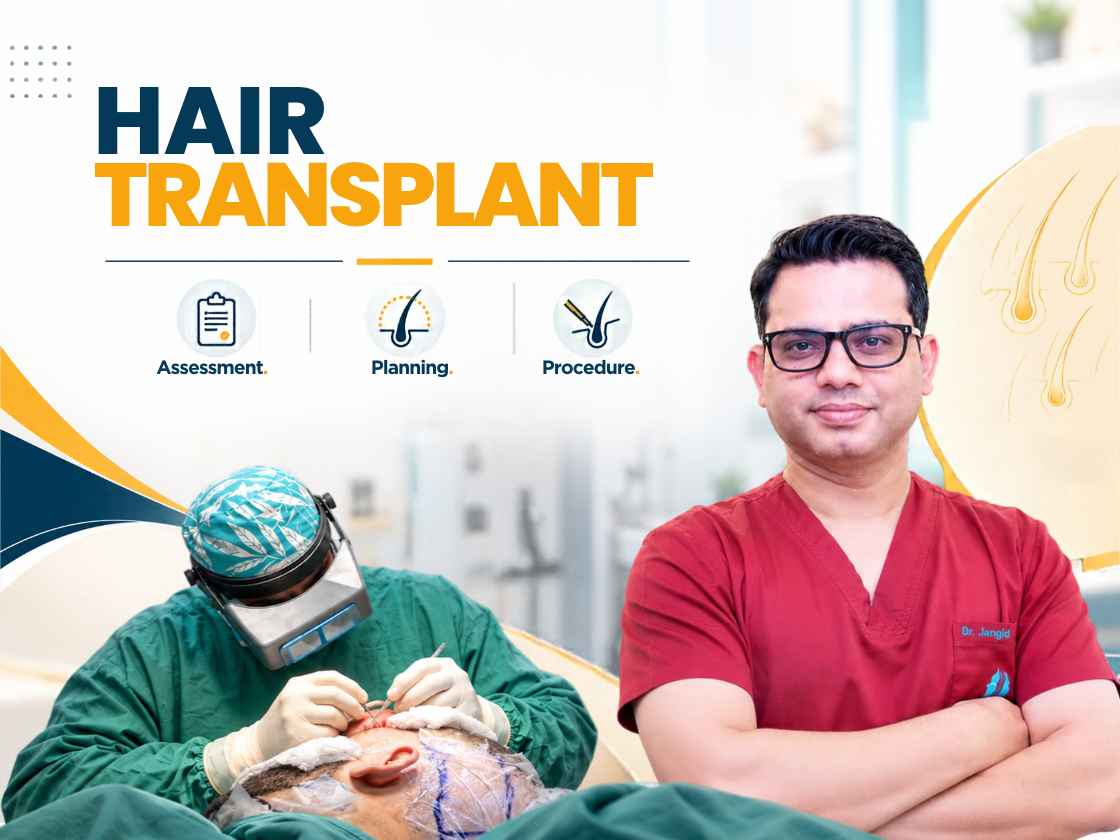
What Is Harvesting?
A hair transplant is a surgical procedure in which a dermatological surgeon moves hair from the donor area to the recipient area. The donor site is the part of the scalp the follicles are taken from, and removing those follicles is called harvesting.
Harvesting is a lengthy, multi-step process. It begins with the planning phase and ends with healthy hair ready for transplantation. Hair is only taken from the donor site once planning is complete.
There are several harvesting techniques, and the right one depends on the individual patient:
- Strip harvesting — one of the most widely used techniques. A single-, double- or triple-bladed scalpel removes strips of hair-bearing tissue from the donor site. The incisions are closed with staples and healing usually proceeds without complications. The donor hair is removed with a long oval incision rather than a strip.
- Round graft harvesting — an uncommon type of harvesting today. It was more common before the newer methods were developed.
- Follicular Unit Transplantation (FUT) — one of the latest donor-site harvesting and transplantation techniques. It works with the small groupings of hair follicles in which hair naturally grows on the scalp.
Harvesting is how the hair is taken out. Everything that follows on this page — grafts, slitting, holding solutions — describes what happens to that hair between leaving the donor area and settling into the recipient area.
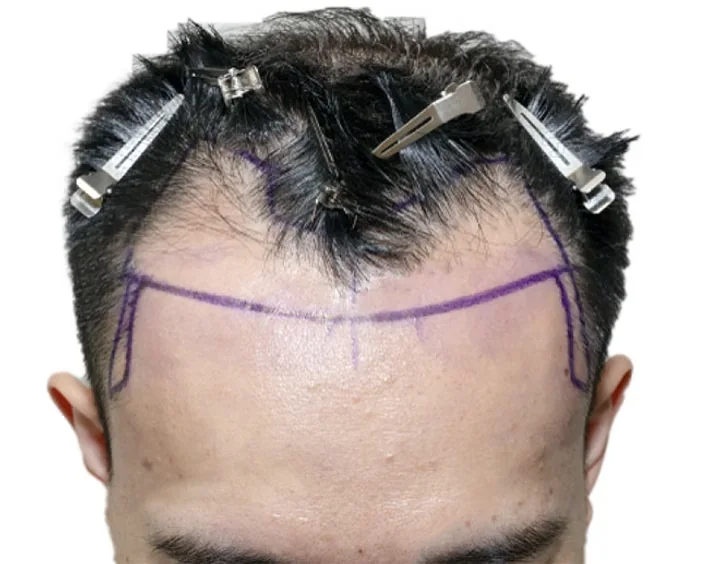
Donor Area For Hair Transplant
Three areas of the body can supply grafts. They are not interchangeable — each behaves differently once transplanted.
Scalp Donor Area
The scalp is the most preferred donor area for achieving natural-looking hair after the transplant. The ideal location is the back or side of the scalp, where growth is usually remarkable.
Pros
- Hair is taken from the permanent zone
- 100% similar to the frontal hair
- Good growth
- No or minimal effect of hormones
- Maintains the look for longer
- Restores a natural look
Beard As A Donor Area
Beard hair is generally very thick and relatively easy to harvest. Its texture and thickness are close to scalp hair, so it is often chosen as a donor area in men's hair transplants.
Pros
- Grows well and has a long life
- Thick, so it covers an area nicely
Cons
- Single hair, not as natural as scalp hair, so it cannot be planted on the frontal area
- Difficult to harvest
Chest As A Donor Area
The chest can also work as a donor area and is the commonly used non-scalp donor site — though beard hair is preferred over it.
Pros
- All the hair can be taken since it covers the area
- Suitable for filling
Cons
- Hair is thin and does not grow well
- Single strand, cannot be planned on the front area
- Difficult to harvest
How Are Recipient Sites Created For Hair Transplant?
An assessment of the recipient area is done before the transplant. When a person faces hair loss, professional guidance helps decide whether a transplant is required at all. The patient must understand how much the recipient area matters.
During the procedure the doctor creates thousands of tiny incisions, called the recipient sites. These are made in the bald area of the scalp, and the harvested follicular unit grafts are placed into them. The outcome of the hair transplant is affected in large part by the pattern of these sites and how they are created.
Before site creation, follicular units of different sizes are matched to specific site sizes to find the best instrument for each graft. The sites are custom-fitted to the grafts, which helps healing. Patients can return to showering and gently shampooing their hair the day after the restoration.
How Are The Recipient Sites Created?
Various instruments are used depending on the clinical situation. The primary goal is a snug fit between the follicular unit and the skin surrounding the graft. This maximises graft oxygenation, promotes healing and increases graft survival. Many tiny recipient sites ensure there will be no visible pitting, scarring or surface irregularities.
Recipient sites are generally made with hypodermic needles or custom-made ultra-fine blades. This area is sensitive and needs extra care. The surgeon uses it to design the hairline, which marks the implant points and sets the angulation of the transplanted hair. The lines and angles follow the direction of natural hair growth. Once the drawings are complete, anaesthesia is given to the recipient area and the hair is implanted. After the procedure the patient continues to look after this area to support further growth.
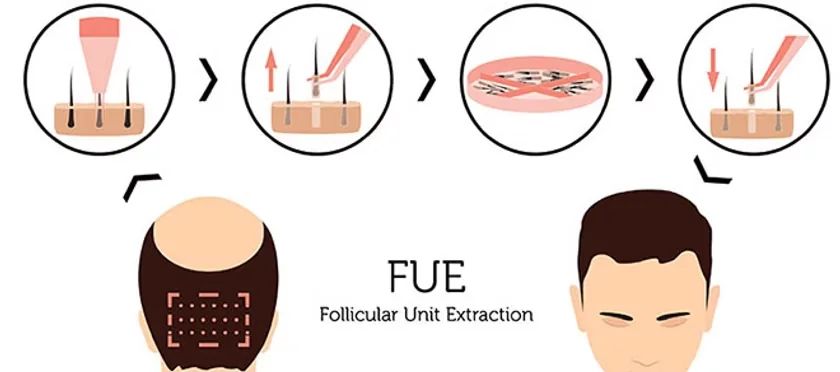
What Are Follicular Units Or Grafts?
Grafts, or follicular units, are the basic building blocks of a hair transplant. It was once thought that hair grows as a single strand throughout the scalp. It was then observed that hair grows in bundles of one to five at a time, forming a single anatomic and physiological unit. That unit was named the follicular unit — and in the context of a hair transplant procedure it is known as a graft.
To the naked eye the hair appears to grow individually. But if the hair is trimmed short and the scalp is viewed under magnification, the groups become readily visible. What you see on the surface are the tops of the naturally occurring follicular units lying below. Transplanting these units, rather than mini-micro grafts or plugs, revolutionised modern hair transplantation worldwide, and it is what makes great-looking results possible.
A follicular unit consists of a small group of hair follicles together with the nerves, blood vessels and a tiny muscle known as the erector pili. Its major advantage in surgery is that it keeps the recipient site as small as possible. The smaller the recipient site, the closer the grafts can be placed. In a single session, small recipient sites allow many grafts to be transplanted without injuring the scalp or compromising its blood supply, and they maximise the density that can be achieved in one sitting.
How dense the result looks depends on both the number of grafts and the number of hairs each graft contains. Because the hairs inside a follicular unit sit very close together, transplanting whole units places the maximum amount of hair into the smallest recipient sites. That is what gives a maximum-density look. It also stops the grafts from looking pluggy, because a follicular unit is simply how hair already appears — provided the direction of each unit is correct.
Grafts have to stay manageable. Larger units compromise naturalness; smaller ones give less fullness.
What Is A Grafts Calculator?
A graft calculator helps work out the cost of a hair transplant for your specific circumstances. The team reviews the patient's hair loss while using it. The tool helps predict the status of the hair loss and the options open to the patient, and the result tells you whether you are a suitable candidate or whether a different procedure should be followed. It also helps you understand how many grafts need to be transplanted, by assessing the bald or thinning areas that need covering. Those grafts are then harvested and re-implanted in the desired areas.
Graft Number
The total number of grafts needed for a complete surgical hair restoration varies enormously, because patients differ in hair density, head size, head shape and facial characteristics.
The graft number is a function of area and density:
Number of grafts = area to be transplanted (cm²) × density (grafts per cm²)
There is no fixed number of grafts for a particular hair loss condition. A rough estimate can be calculated by the surgeon.
Estimate Your Graft Count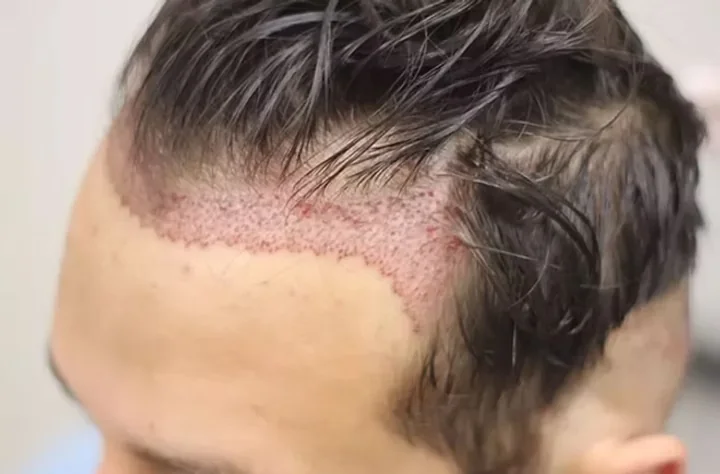
What Is Grafts Punching?
An older extraction technique, and the reason older transplants looked pluggy.
A punch graft is one of the most common techniques used in hair transplantation. It works by removing a part of the skin that bears hair; that graft is then relocated into a region which is punched to fit it.
Graft punching is one of the oldest procedures specialists use. It was the standard technique for over 20 years and was generally practised from 1970 until 1993. A punch graft can be prescribed for people with heavy balding.
During a punch graft for hair implantation, a few steps are taken:
- The hair in the scalp region is first cut short, which makes the grafts simpler to reach.
- Anaesthesia is given at the site.
- A 4 mm punch removes a round, hollow section of hair-bearing skin. The skin should carry around 12 to 30 strands.
- The graft is removed from the region and the uncovered skin is taken away.
- The region is covered with the punch graft.
- The scalp is cleaned and covered with a dressing.
- The region is left to heal without any medication or therapy.
- The process is repeated as needed to achieve the patient's ideal look. The specialist ensures the grafts are placed correctly so the hair fills in adequately.
What Are The Risks And Complications Associated With Graft Punching?
Graft compression. There is a risk that the graft condenses once the skin has healed, giving it a "pluggy" look. This is well known among patients whose hair is dull.
Other issues with this method are:
- It removes a large proportion of the hair follicles at the site.
- Because the hair roots are trimmed off, regrowth is sometimes a problem.
- Most of the relocated follicles do not survive in the long run.
Where Should You Get Graft Punching Done?
If you are considering graft punching, visit SkinQure in Delhi and speak to a hair transplant surgeon about whether it — or a modern FUE hair transplant — is the right approach for your hair loss.
How Slitting Is Used In Hair Transplant
The innovative technique used to place the graft in the scalp is the lateral slit technique. The earlier approach made the recipient sites parallel to the direction of hair growth, which caused the grafts to line up and give an unnatural, thin appearance. The lateral slit technique changed that thinking completely: the idea is to make the recipient sites perpendicular, or lateral, to the direction of hair growth.
According to research by leading hair surgeons, the lateral slit technique is the only method that can duplicate the alignment and distribution of hair as it occurs naturally — maximising coverage and eliminating the pluggy results of older methods.
The angle and direction of hair growth are controlled, which allows areas previously regarded as too difficult to be transplanted. In the donor area the follicular units line up alongside one another in a plane perpendicular to the direction of hair growth. The lateral slit technique copies nature's arrangement of follicles, and that is what gives patients a natural result.
Hair exits the scalp at an acute angle in the frontal hairline and central crown. In the mid-scalp the hair leaves at a forward curve, unlike the frontal scalp. Using this technique, the doctor can create an opening for the follicular units at the same angle for the area being treated.
To make the lateral slits the doctor uses custom blades cut to fit the patient's own follicular units, which range from single-hair units to larger ones. Each unit is measured and a custom-cut blade is checked against the various graft sizes, so the graft fits the size of the slit opening exactly. Once the fit is right, more openings can be made in the same space to maximise graft density and produce a more natural result. Healing improves when the grafts fit the recipient sites perfectly — that is where oxygenation is maximised, which speeds healing and increases graft survival.
What Are GHS Or Graft Holding Solutions?
Follicular units are collected from the donor area and rooted into the recipient region. The time between a graft being harvested from the body and being placed back is the period when the hair follicle cells are cut off from circulation, and the supply of oxygen and other nutrients is on hold. This period is known as ischemia time.
- The graft is kept or stored in a Graft Holding Solution during this period.
- The purpose of a Graft Holding Solution is to prevent the graft from drying out and to limit ischemic injury to the hair follicle cells.
- The most regularly used solutions are extracellular graft-holding solutions such as normal saline and platelet-rich plasma.
- Every hair transplant surgeon in Delhi should use a GHS to ensure complete safety for their patients.
What Are Things To Keep In Mind About GHS?
- Hair follicles face several problems during implantation. The injuries are ischemic injury, cold injury and the microtrauma sustained during graft handling.
- The delay between follicle collection and implantation is called the out-of-body time, or ischemia time. During this period the graft is cut off from blood flow and stays in an ischemic condition, leading to ischemic injury.
- Cell metabolism depends on temperature. Lower the temperature and oxygen use and metabolism fall with it. At a low temperature swelling increases, which can lead to cell enlargement and result in cold injury.
- During ischemia, hypoxanthine builds up in the graft cells; when the graft is re-exposed to oxygen after transplantation, that build-up damages the DNA.
- Rough handling of hair follicles can cause minor injury to the cells, affecting the final result.
- The Graft Holding Solution is used immediately after the grafts are extracted.
What Is Graft Out Of Body Time, And What Influences It Most?
A great deal of attention is paid to identifying and fixing the factors that affect graft strength after a hair transplant. The critical ones are the patient's general health, the characteristics of the hair, and the techniques used. Generally, the recovery time for the transplanted grafts to settle is around 8 to 10 days.
Care matters most in the first fortnight after the transplant, because the grafts are not yet fixed in place:
- After 2 to 5 days the bandages can be taken off, without touching the grafts.
- Wash your hair gently with clean water only, without using your hands.
- After fourteen days you can wash your hair normally and return to your everyday routine.
- After 10 to 14 days any stitches can be removed.
- After a few weeks the transplanted hairs shed and new hair begins to emerge.
- After around six months you can see new hair starting to appear.
- After around eighteen months you can see the complete outcome, with full hair development.
- If you notice anything unusual such as infection or extreme itching during healing, consult your hair transplant surgeon immediately.
Grafts falling out is very uncommon after a hair transplant procedure.
What Are The Factors Influencing Graft Out Of Body Time?
Hair transplantation and graft survival go smoothly when the surgeon selects the right candidates for the procedure. The factors that influence graft survival are:
- The patient's scalp condition
- Dehydration
- The method used
- Blunt trauma
What Are The Aftercare Tips For Hair Transplant?
A few things to keep in mind once the procedure is behind you.
Washing
You can wash your hair, but use the gentle shampoo your specialist advises for the first few weeks.
Going Back To Work
Some people return to work in around three days, while others need over seven days.
Leave The Grafts Alone
Do not brush or pick at your new grafts for about three weeks, and keep caps off the grafted area until everything has settled.
Shedding Is Normal
Do not worry when some hairs drop out — shedding is part of the process before the new hair grows in.
Hair Transplant Results
Before-and-after photos of individual cases treated by Dr. Jangid at SkinQure, Delhi, shown for educational purposes.
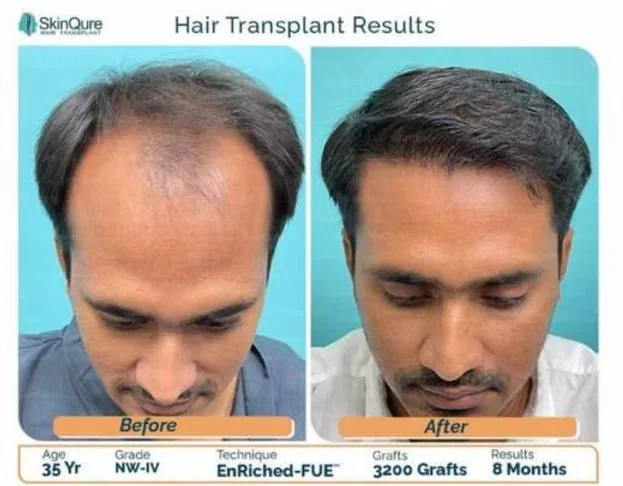
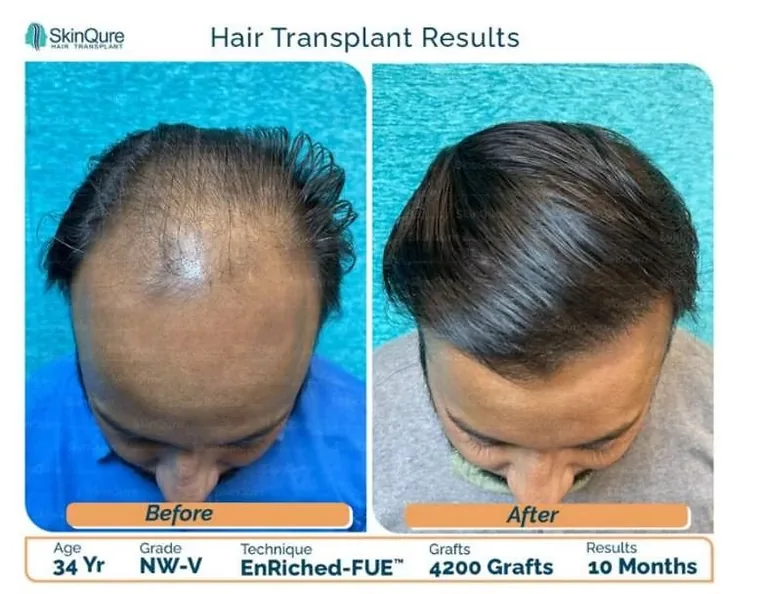
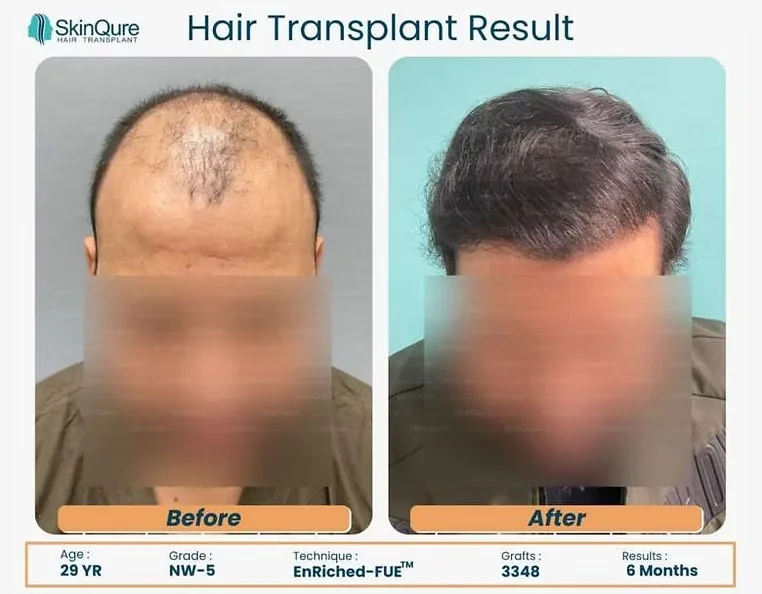
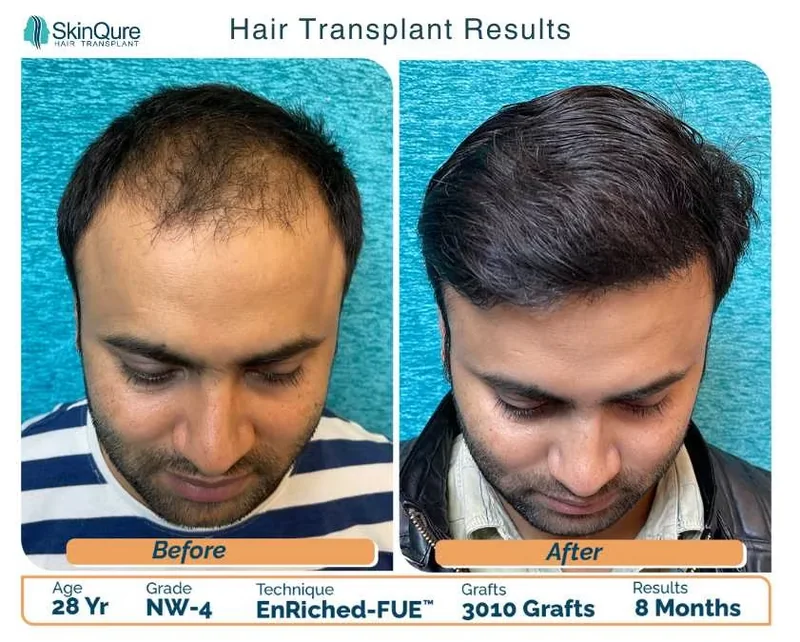
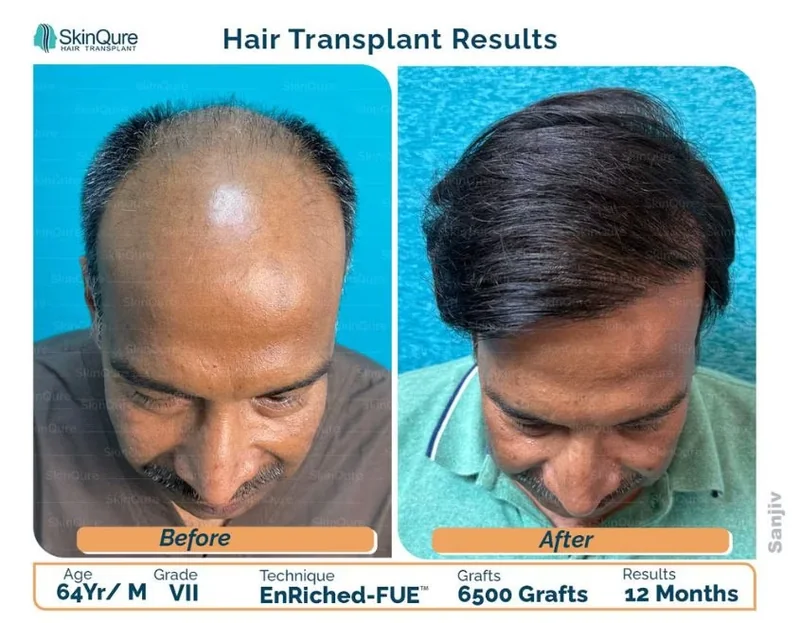
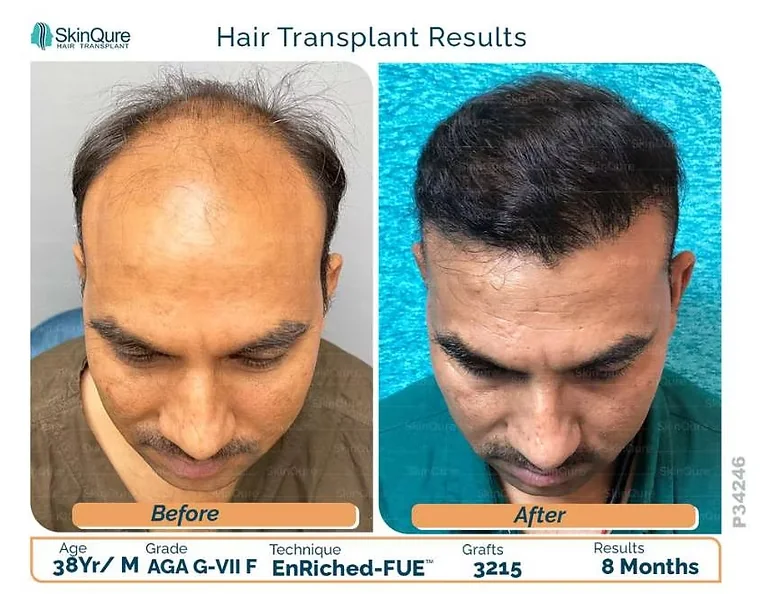
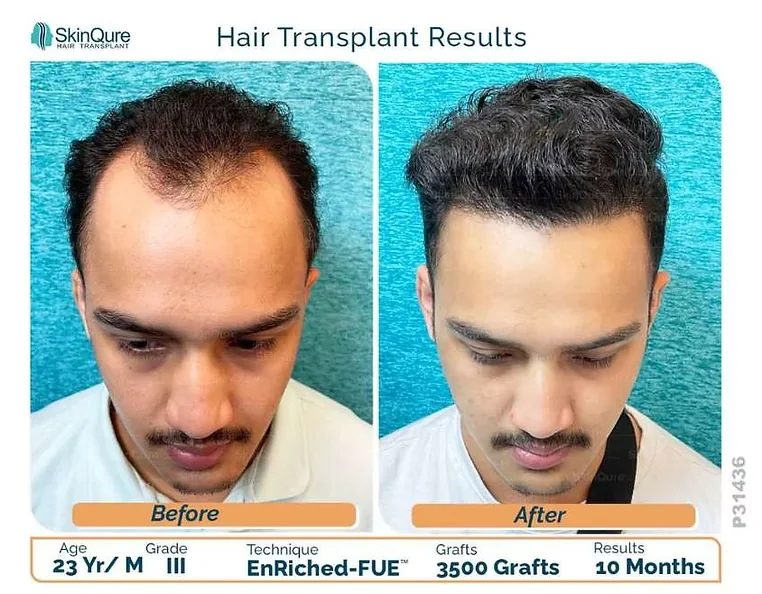
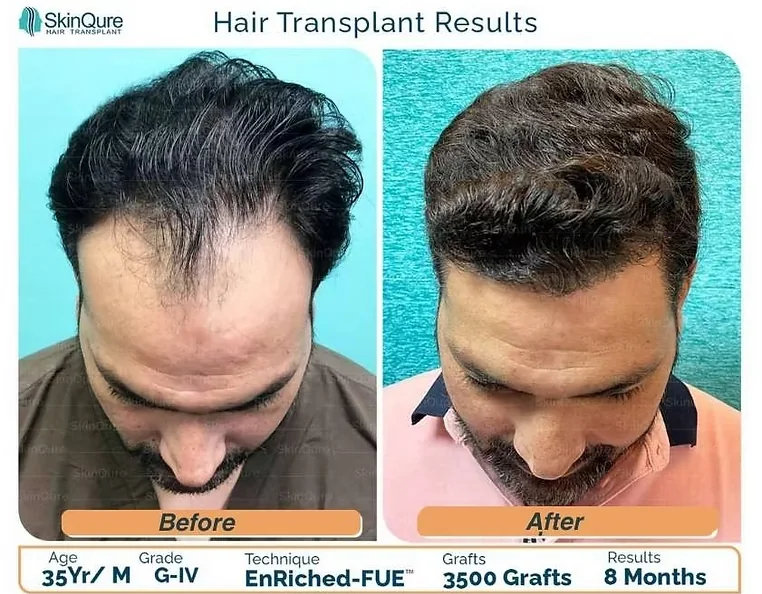
Disclaimer: These images feature actual patients of SkinQure and are shared with their informed consent for educational and awareness purposes. Individual results may vary depending on hair loss patterns, donor area, and overall health. Similar outcomes cannot be guaranteed.
Hair Transplant Terms: Frequently Asked Questions
What is the difference between a graft and a follicular unit?
They are the same thing. Hair grows naturally in bundles of one to five hairs, which form a single anatomic and physiological unit called a follicular unit. In the context of a hair transplant procedure, that unit is called a graft.
Which is the best donor area for a hair transplant?
The scalp. The back and sides come from the permanent zone, are 100% similar to the frontal hair, grow well and are barely affected by hormones. Beard and chest hair are used as non-scalp donor areas, but they are single-hair, harder to harvest and cannot be planted on the frontal area.
How many grafts will I need?
There is no fixed number for a given hair loss condition. The graft number is a function of area and density: grafts = area to be transplanted in cm² × density in grafts per cm². The surgeon calculates a rough estimate after assessing your bald and thinning areas.
What is graft out-of-body time?
It is the period between a graft being harvested and being implanted, during which the follicle cells are cut off from blood flow, oxygen and nutrients. It is also called ischemia time, and it is why grafts are stored in a holding solution.
Why does slitting matter for a natural result?
The lateral slit technique makes the recipient sites perpendicular to the direction of hair growth instead of parallel to it. That copies the way follicles are arranged naturally, maximises coverage and avoids the pluggy look of older methods.
What is a graft holding solution made of?
The most regularly used are extracellular solutions such as normal saline and platelet-rich plasma. Their job is to stop the graft drying out and to limit ischemic injury to the follicle cells while they are out of the body.
How long until I see the full result?
The grafts settle in around 8 to 10 days and normal washing resumes after about fourteen days. New hair starts to appear at around six months, and the complete outcome is visible at around eighteen months.
Is graft punching still used?
It was the standard technique from about 1970 until 1993 and is rarely the right choice today. It removes a large proportion of follicles at the site, regrowth can be a problem, and the compressed grafts can leave a pluggy look. Modern FUE and FUT techniques have replaced it.
Still deciding whether a hair transplant is right for you?
Bring your questions to Dr. Jangid's team and get an honest assessment of your donor area, graft count and options.
Request an Appointment Call +91-9266555500Schedule Your Visit
Appointments at SkinQure are arranged directly by phone, by email or through the enquiry form here, so you can speak to the team before you book.
- Saket: Block J, J-215, New Delhi, Delhi 110017
- Punjabi Bagh: 3rd Floor, 17 NWA, Club Road, New Delhi, Delhi 110026
- Hours: Monday–Sunday, 10:30 AM–6:30 PM
- Phone: +91-9266555500