
Hair Transplant Case Studies On Video
Dr. Jangid walks through real patient cases on camera — what was planned, what was done, and what the result looked like months later. Including the cases that were harder than they looked.
- 8 case discussions
- Explained by the surgeon
- Before and after shown
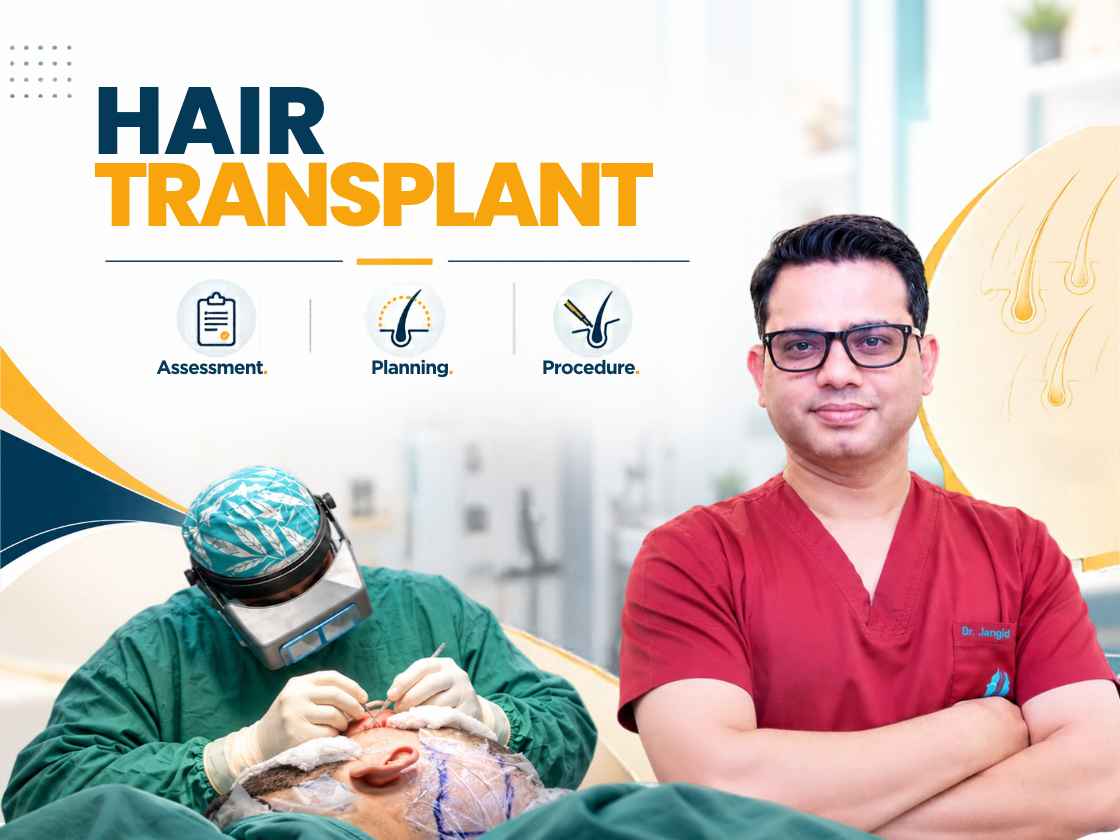
Hair Transplant Case Study Videos
Each video covers one real patient case, explained by Dr. Jangid himself. Click any thumbnail to play.
What These Case Videos Show You
Photographs show the outcome. These videos show the reasoning behind it.
When Not To Operate
The first video asks whether a 22-year-old should have a transplant at all. Hair loss that is still progressing can make an early transplant age badly, and that question deserves an honest answer before surgery, not after.
What Failure Looks Like
One case covers the correction of a failed transplant done elsewhere, and why such procedures fail. Few clinics publish this. It is the most useful video on the page if you are comparing surgeons.
Growth Month By Month
A case tracked from day zero to nine months, so you can see the real pace of growth rather than a single after photograph.
Different Grades And Areas
Cases from Grade 2 through to crown restoration, showing how the plan changes with the pattern and extent of loss.
Traction Alopecia
Hair loss caused by tension on the follicles rather than genetics, which needs a different approach from pattern baldness.
How Much It Hurts
A direct answer on pain during the procedure, from the surgeon performing it.
More Case Studies and Results
Written Case Studies
The full surgical plan for individual patients — donor assessment, graft counts, hairline design and the doctor's own notes.
View Case StudiesHair Transplant Results
Before and after photographs from 45 patients, filtered by hair loss grade and technique.
View ResultsPatient Video Testimonials
Patients describing their own experience of the procedure and the result, in their own words.
Watch TestimonialsHair Transplant Results
Before-and-after photos of individual cases treated by Dr. Jangid at SkinQure, Delhi, shown for educational purposes.
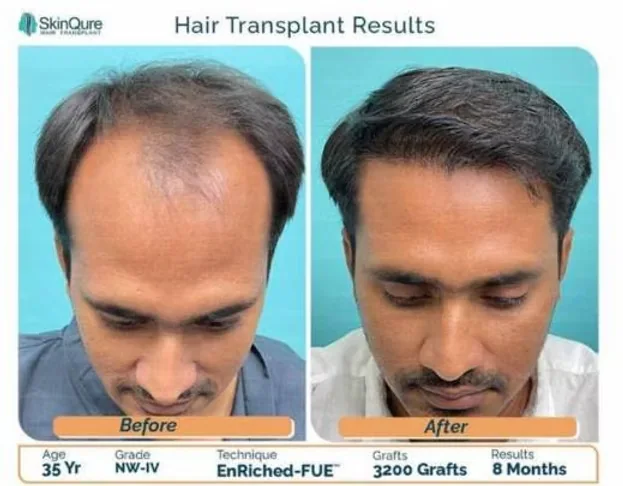
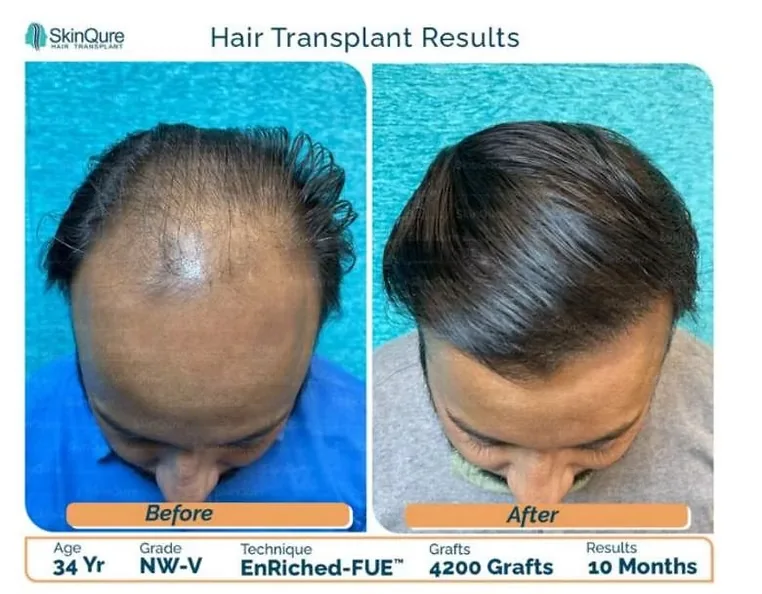
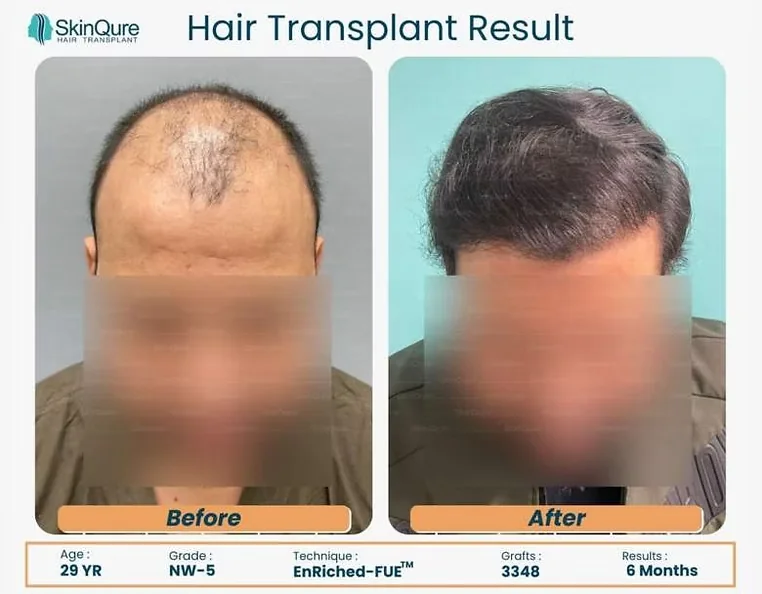
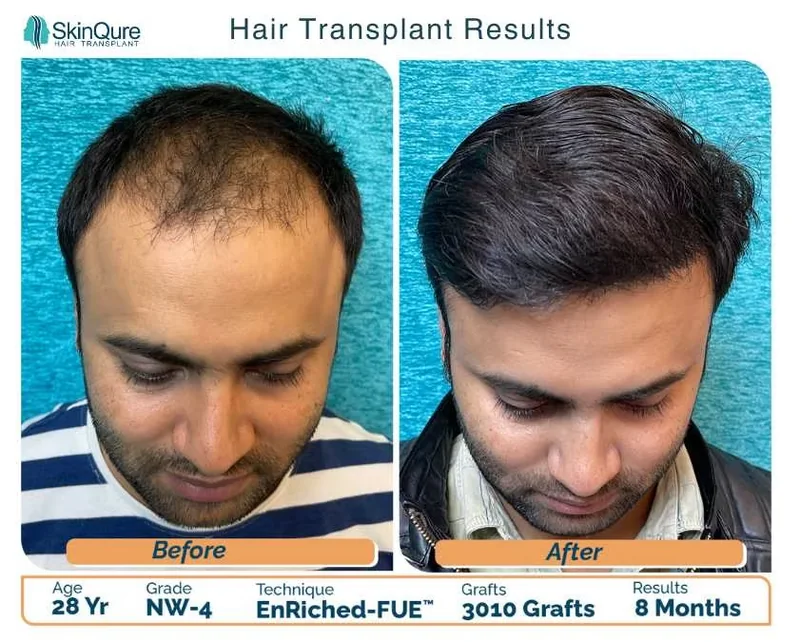
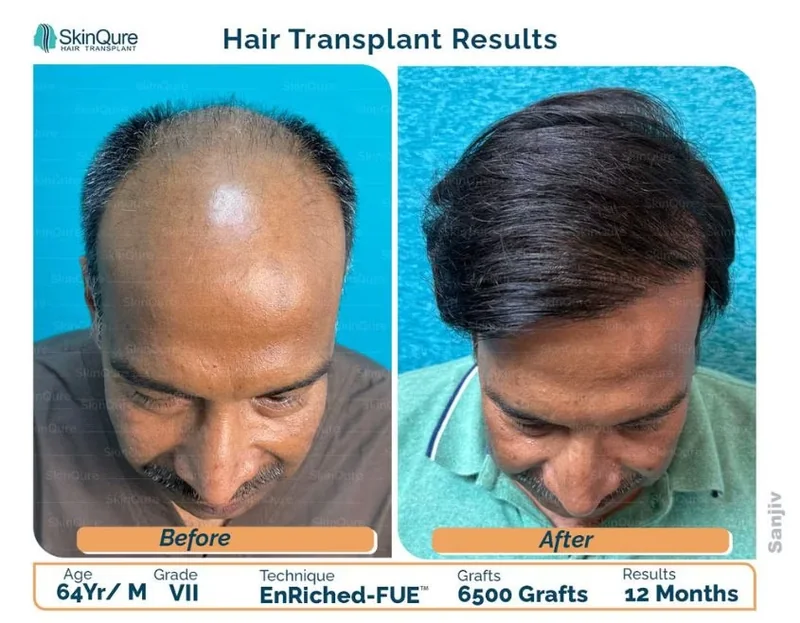
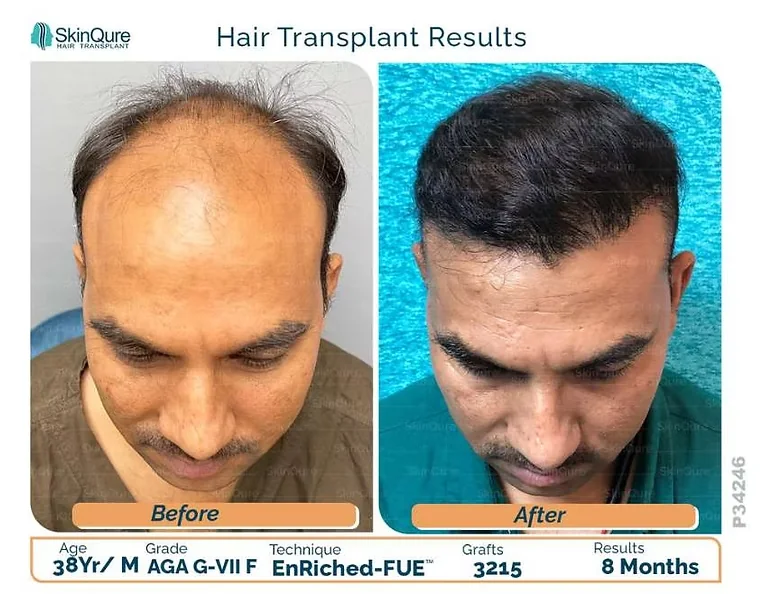
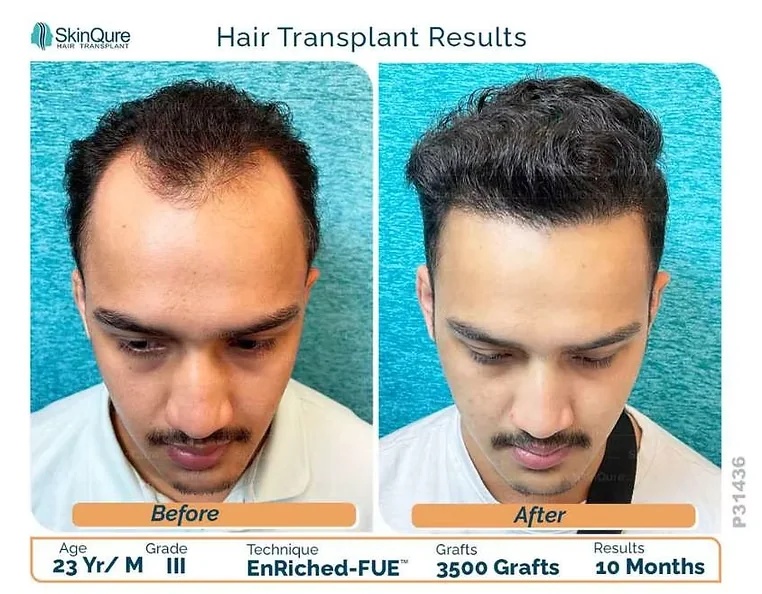
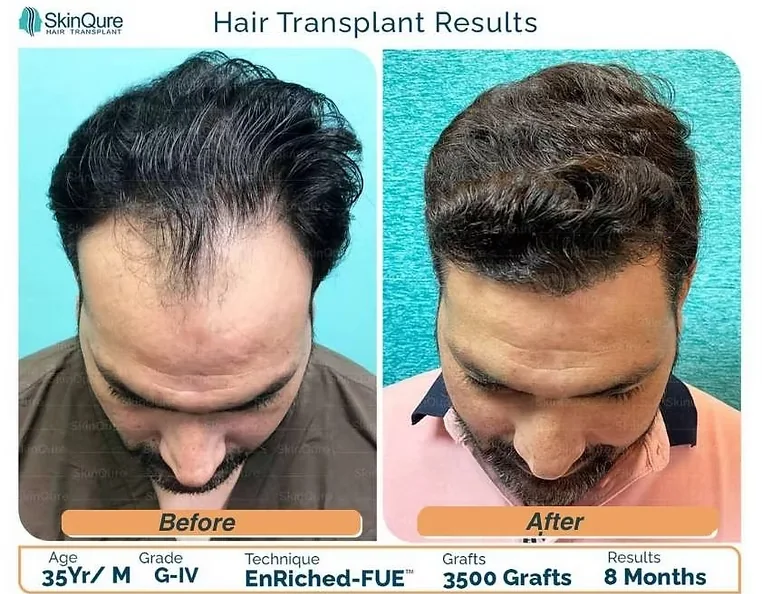
Disclaimer: These images feature actual patients of SkinQure and are shared with their informed consent for educational and awareness purposes. Individual results may vary depending on hair loss patterns, donor area, and overall health. Similar outcomes cannot be guaranteed.
Frequently Asked Questions
Are these real SkinQure patients?
Yes. Every case discussed in these videos is a patient treated by Dr. Jangid at SkinQure in Delhi, with the surgical plan and result explained by the surgeon who performed the procedure.
Should I have a hair transplant in my early twenties?
Not always. Hair loss that is still actively progressing can leave an early transplant looking unnatural as the surrounding hair continues to thin. The first video on this page covers exactly this question.
Can a failed hair transplant be corrected?
Often yes, depending on how much donor hair remains and how the original procedure was done. One of the videos on this page walks through a correction case and the reasons transplants fail.
How quickly does transplanted hair grow?
Transplanted hair sheds in the first few weeks, then new growth begins at around three to four months. The 0 to 9 month case video shows this timeline on a real patient.
Is a hair transplant painful?
Local anaesthetic is given at the start, so the procedure itself is not painful. One of the videos covers this directly, including what the injections feel like.
Can the crown be transplanted?
Yes, though the crown consumes a large number of grafts because of the whorl pattern, so it is planned against the donor supply available. There is a dedicated crown case video on this page.
What is traction alopecia?
Hair loss caused by prolonged tension on the follicles, from tight hairstyles for example, rather than by genetics. It is treated differently from pattern baldness, and there is a case video covering it.
How do I discuss my own case with Dr. Jangid?
Request a consultation at either the Saket or Punjabi Bagh clinic. Your donor area is examined and you are told honestly what is achievable before anything is planned.
Want your case assessed?
Dr. Jangid will examine your donor area and tell you honestly what is achievable — including when a transplant is not the right answer.
Request an Appointment Call +91-9266555500Schedule Your Visit
Appointments at SkinQure are arranged directly by phone, by email or through the enquiry form here, so you can speak to the team before you book.
- Saket: Block J, J-215, New Delhi, Delhi 110017
- Punjabi Bagh: 3rd Floor, 17 NWA, Club Road, New Delhi, Delhi 110026
- Hours: Monday–Sunday, 10:30 AM–6:30 PM
- Phone: +91-9266555500