
What Is Hair Transplant – An Overview
Worried about thinning on top, or going bald? Here is what a hair transplant actually is, who it suits, and what the procedure involves — explained by Dr. Jangid, Ex-Senior Resident Dermatologist at AIIMS.
- 4–6 hour day procedure
- Permanent, your own hair
- 18+ years of experience
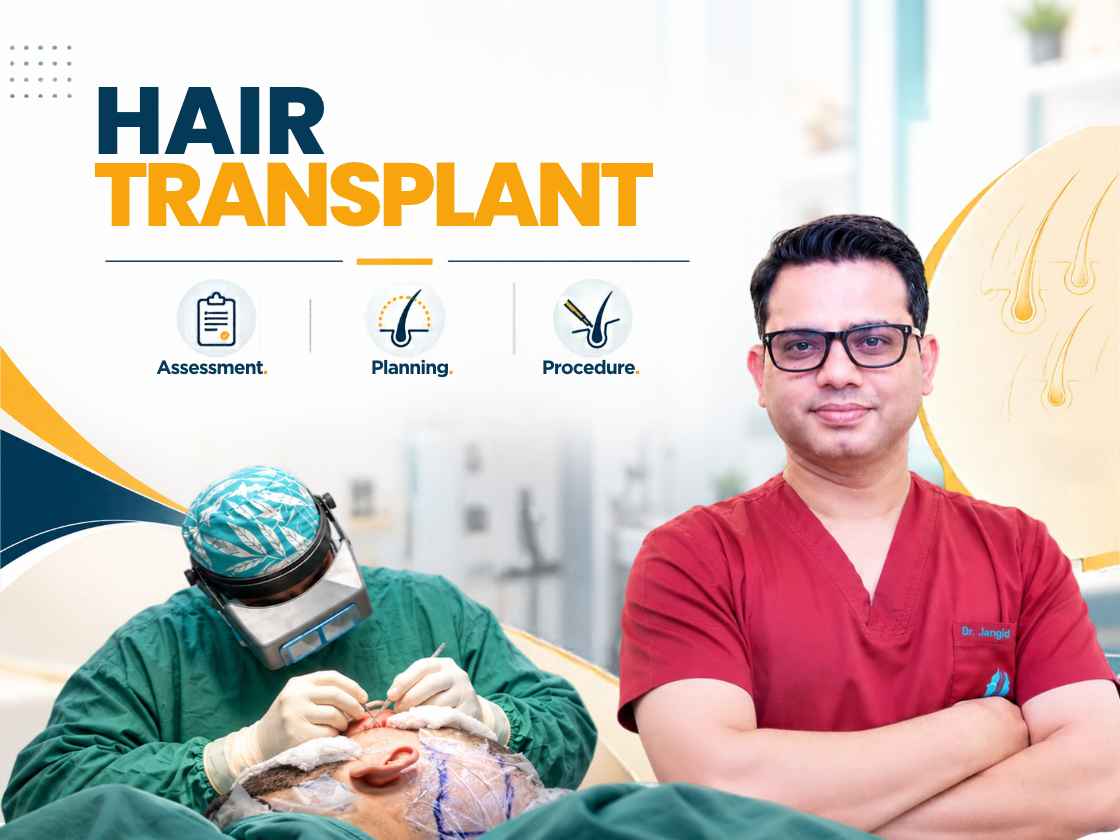
What Is A Hair Transplant?
A hair transplant is a surgical procedure in which a dermatological surgeon moves hair from the back or side of the head — the donor area — to the front or top of the head, the recipient area.
It is a medically approved procedure involving an artistic redistribution of hair roots. Follicles are taken from the donor-dominant hair at the back of the head and transplanted into the bald areas of the scalp. Those hairs behave like your own hair, because they are your own hair, and they are permanent. With today's minimally invasive technique and careful artistic execution, the result is close to a natural appearance.
It is a day-care procedure taking around four to six hours. Most people are seeking it to restore their look after male pattern baldness, also called androgenetic alopecia, which is the majority cause of hair loss.
Gone are the days when the only option was unnatural, doll-like hair plugs that anyone could spot. Techniques have moved on far enough that the hair looks natural — natural enough that a barber or stylist usually cannot tell the procedure was done at all.
When the procedure is performed with precision by an experienced team, hair transplant specialists in Delhi report success rates approaching 99%. Outcomes still vary with your donor density, scalp condition and how closely aftercare is followed — which is why an honest assessment matters more than a headline number.
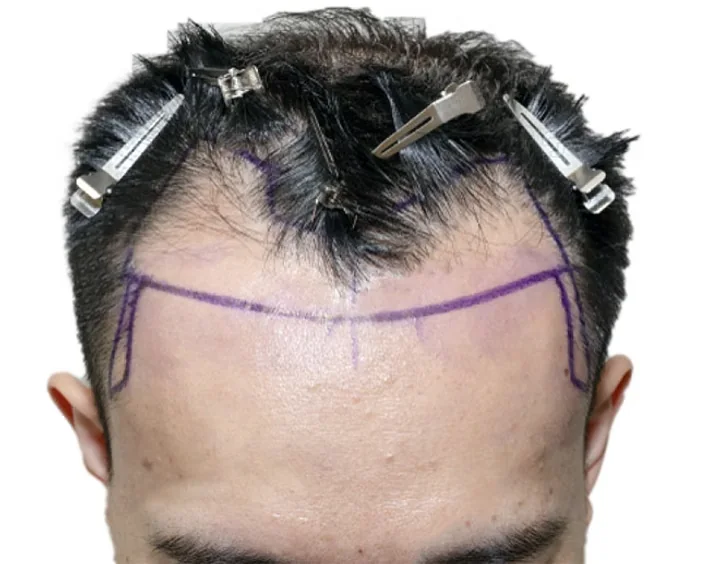
Why Hair Falls In The First Place
Most people take their hair for granted — until they start losing it. Pattern baldness accounts for the majority of hair loss, and genetics is the single biggest factor behind it.
Genetics
Male and female pattern baldness runs in families. It is the cause in most cases, and it is the one a transplant is designed to address.
Stress And Illness
Physical or emotional stress and periods of illness can push hair into the shedding phase. This type of loss is often temporary.
Hormonal Imbalance
Thyroid disorders, PCOS and other hormonal changes affect the growth cycle, and often respond to treating the underlying cause.
Medications
Some medicines list hair loss among their effects. Worth reviewing with your doctor before assuming the cause is genetic.
Diet
Iron, protein and vitamin deficiencies show up in the hair. Correcting them can restore growth without any surgery.
Certain Therapies
Some medical treatments cause shedding as a side effect. Hair usually returns once the course finishes.
Not every kind of hair loss needs surgery. Several of the causes above are reversible with medication or by treating what is behind them — see hair loss treatment and common causes of hair loss. A transplant is the answer for permanent, pattern loss.
Donor And Recipient Areas
Two terms come up in every consultation, and they are worth knowing before you walk in:
- Donor sites — the areas of the body the hair is taken from. The back and sides of the scalp are preferred, because that hair sits in the permanent zone and is barely affected by the hormones that cause pattern baldness.
- Recipient sites — the bald or thinning areas the grafts are placed into. The surgeon creates thousands of tiny incisions here, each sized to the graft going into it.
How those recipient sites are made — their angle, density and pattern — is what separates a natural result from an obvious one. That detail, along with graft handling and out-of-body time, is covered in the hair transplant terms guide.
Read The Terms Guide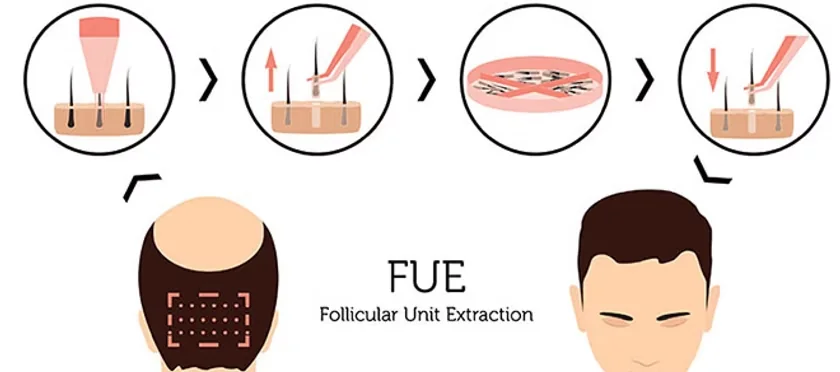
Which Hair Transplant Technique?
There is no single best technique — there is the one that fits your donor area, the area to be covered, and how short you wear your hair.
FUE Hair Transplant
Follicular units are extracted one at a time from the donor area. No linear scar, so it suits anyone who wears their hair short.
EnRiched-FUE™
Dr. Jangid's own refinement of FUE, combining the extraction technique with growth factor support for the transplanted grafts.
FUT Hair Transplant
A strip of donor tissue is removed and dissected into grafts. Moves the highest number of grafts in one sitting, at the cost of a fine donor line.
FUT vs FUE
A direct comparison of the two on scarring, graft numbers, recovery and cost, to help you understand which one is likely to be recommended.
Is A Hair Transplant Right For You?
A hair transplant moves hair; it does not create new hair. That one fact decides most of the answer. A good candidate usually has:
- Stable, pattern hair loss rather than active sudden shedding
- Enough density in the donor area at the back and sides to cover the area that needs it
- Realistic expectations about density — the goal is a natural, well-framed look, not the hair of a teenager
- Willingness to follow aftercare properly for the first two weeks, which affects how many grafts survive
If your loss is recent, patchy, or accompanied by itching, scaling or scarring, the right first step is a diagnosis rather than surgery. Dr. Jangid's team assesses the scalp with trichoscopy before recommending anything, because transplanting into an undiagnosed condition wastes grafts that cannot be replaced.
You only get one donor area in your lifetime. That is the strongest argument for choosing the surgeon carefully rather than choosing on price — a poorly planned first procedure limits what any later one can achieve.
Explore The Science Of Hair Transplant
The rest of this section covers each part of the procedure in detail.
Follicular Units & Grafts
Donor and recipient areas, graft calculation, slitting, punching, out-of-body time and graft holding solutions — every term explained.
All About Hair Transplant
The full picture of the procedure from consultation through to the final result.
The Science Behind It
Why donor-dominant hair keeps growing once it is moved, and what governs graft survival.
Hair Transplant Cost
What drives the price — graft count, technique and the team performing it — and how to estimate yours.
Real Patient Results
Before and after photographs with graft counts, Norwood grades and timelines for each case.
Case Studies
Individual patient journeys followed from the first consultation to the twelve-month result.
Hair Transplant Results
Before-and-after photos of individual cases treated by Dr. Jangid at SkinQure, Delhi, shown for educational purposes.
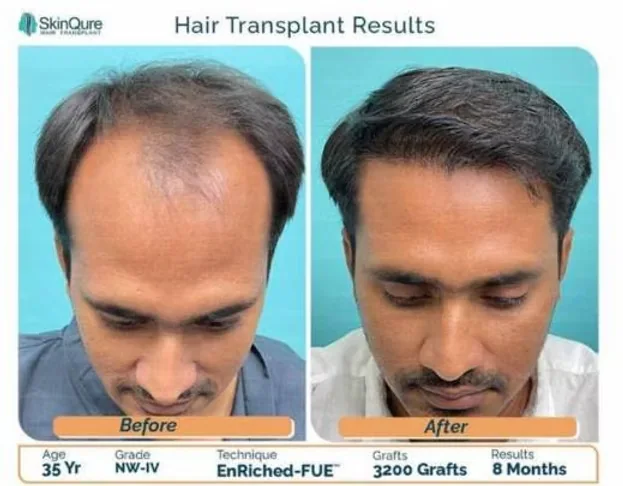
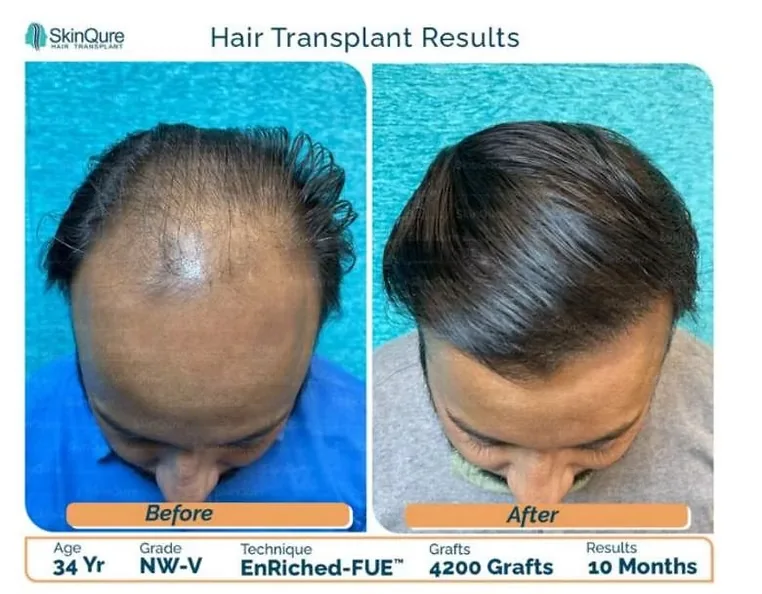
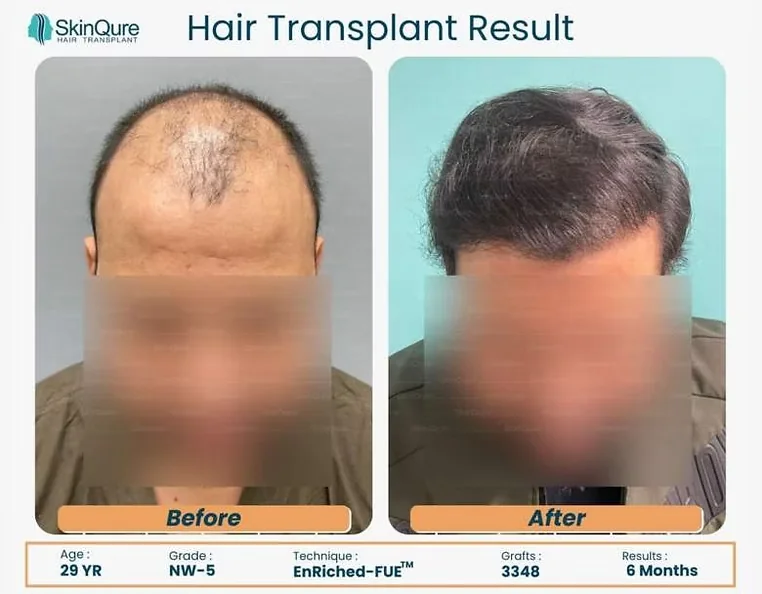
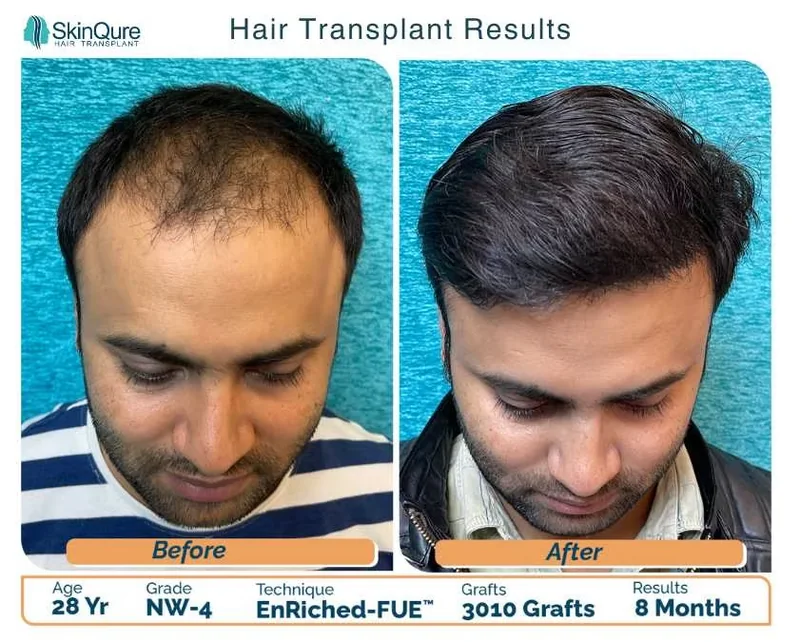
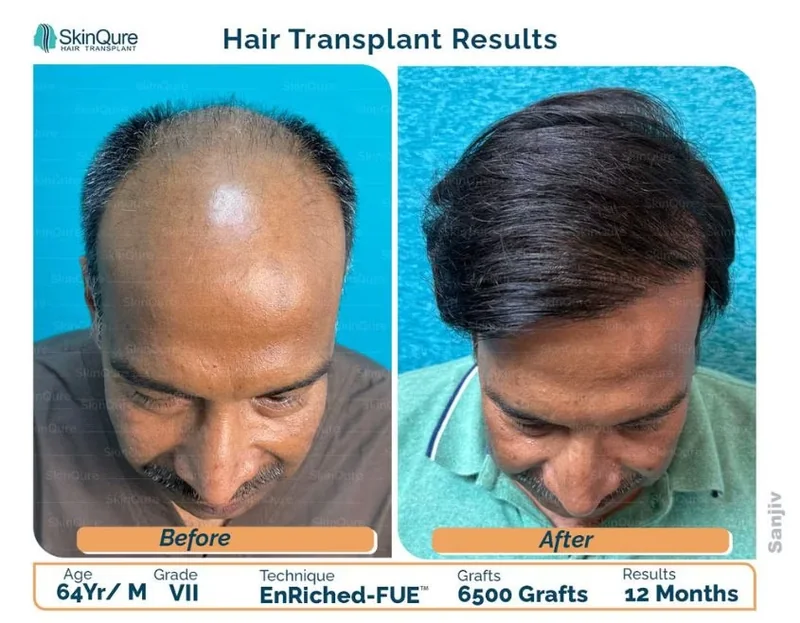
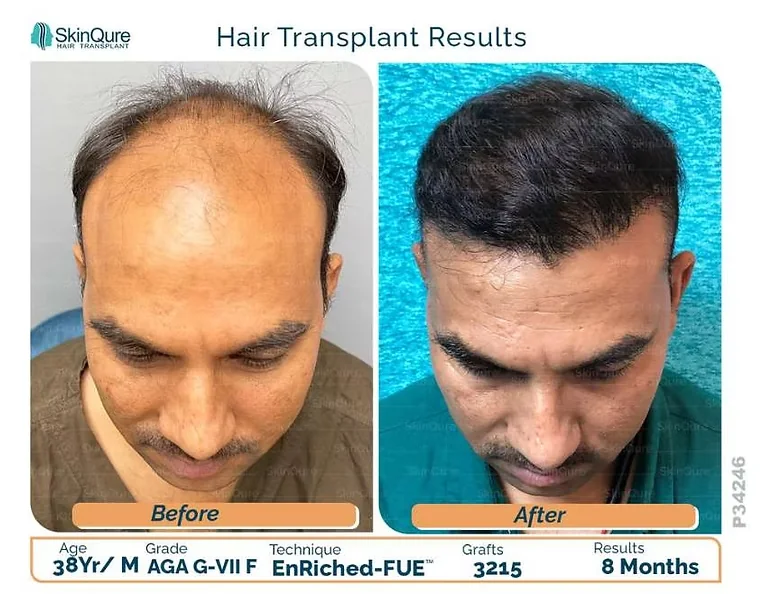
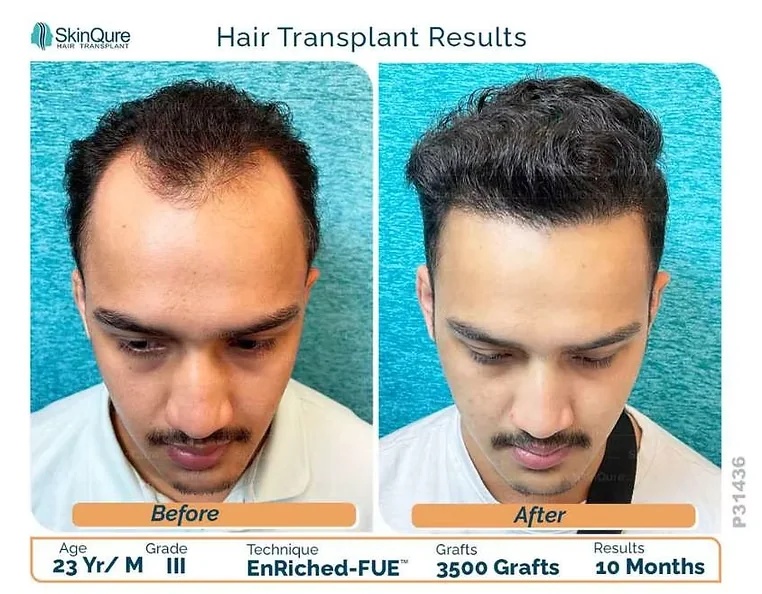
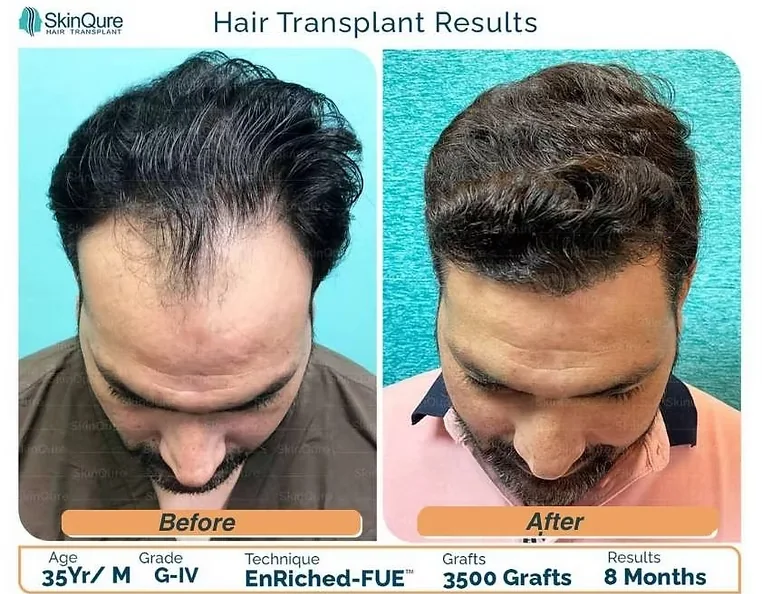
Disclaimer: These images feature actual patients of SkinQure and are shared with their informed consent for educational and awareness purposes. Individual results may vary depending on hair loss patterns, donor area, and overall health. Similar outcomes cannot be guaranteed.
Hair Transplant: Frequently Asked Questions
What exactly is a hair transplant?
A surgical procedure in which a dermatological surgeon moves hair follicles from the back or side of the head, the donor area, to the front or top of the head, the recipient area. The transplanted hair behaves like your own hair because it is your own hair, and it is permanent.
How long does the procedure take?
It is a day-care procedure taking around four to six hours. You go home the same day with a set of aftercare instructions.
Will the result look obvious?
Not when it is planned and executed well. Modern minimally invasive technique places follicular units at the natural angle and density, so the hair usually looks natural enough that a barber or stylist cannot tell.
What causes the hair loss a transplant treats?
Mostly male pattern baldness, or androgenetic alopecia, which is driven by genetics. Stress, illness, hormonal imbalance, medications, diet and certain therapies can also cause hair loss — but several of those are reversible without surgery.
What are donor and recipient sites?
Donor sites are the areas hair is taken from, usually the back and sides of the scalp where hair sits in the permanent zone. Recipient sites are the bald areas the grafts are placed into.
Is the transplanted hair permanent?
Yes. The follicles are taken from the donor-dominant zone, which is barely affected by the hormones that cause pattern baldness, so they keep growing in their new position.
Which technique will I be offered?
It depends on your donor density, the area to be covered and how short you wear your hair. FUE leaves no linear scar; FUT moves more grafts in a single sitting. See the FUT vs FUE comparison.
How soon will I see results?
The transplanted hairs shed within a few weeks, which is normal. New growth usually becomes visible from around six months, with the complete result at roughly twelve to eighteen months.
Not sure whether a transplant is the right answer?
Get an honest assessment of your donor area, your graft count and whether surgery is needed at all.
Request an Appointment Call +91-9266555500Schedule Your Visit
Appointments at SkinQure are arranged directly by phone, by email or through the enquiry form here, so you can speak to the team before you book.
- Saket: Block J, J-215, New Delhi, Delhi 110017
- Punjabi Bagh: 3rd Floor, 17 NWA, Club Road, New Delhi, Delhi 110026
- Hours: Monday–Sunday, 10:30 AM–6:30 PM
- Phone: +91-9266555500