PRP for Women Hair Loss: Does It Really Work?
Hair loss is often seen as a men's problem, but many women also suffer from hair thinning and shedding that reduce hair density. Hormones, stress, nutritional deficiencies, genetics and certain medical conditions can all make female hair loss worse. Beyond the cosmetic concern, hair loss can affect a woman's self-confidence and emotional wellbeing.
Quick answer: PRP (platelet-rich plasma) therapy can help many women with early to moderate hair thinning. It commonly reduces hair fall and can improve hair quality and density over a course of sessions. Results vary from woman to woman, and PRP works best when started early, while the hair follicles are still active. A doctor should first find the cause of the hair loss.
As hair restoration treatments become more popular, many women are choosing PRP for women's hair loss. One of the most common questions patients ask is whether PRP therapy for women in Delhi is effective.
This blog explains how PRP works for women's hair loss, how effective it is, and what results to expect.
Causes of Female Hair Loss
Hair loss in women can be gradual or sudden, depending on the cause. Common signs include a widening hair parting, reduced volume and thinning near the crown. Unlike male pattern hair loss, female pattern hair loss is usually spread across the scalp and rarely causes bald patches.
Common causes of hair fall in women include:
- Hormonal imbalances, such as PCOS
- Pregnancy and postpartum changes
- Menopause
- Stress and anxiety
- Nutritional deficiencies, such as iron deficiency
- Genetics
- Thyroid disorders
- Medications
Correct diagnosis and early treatment improve the chances of regrowing hair and preventing further thinning.
What Is PRP Treatment?
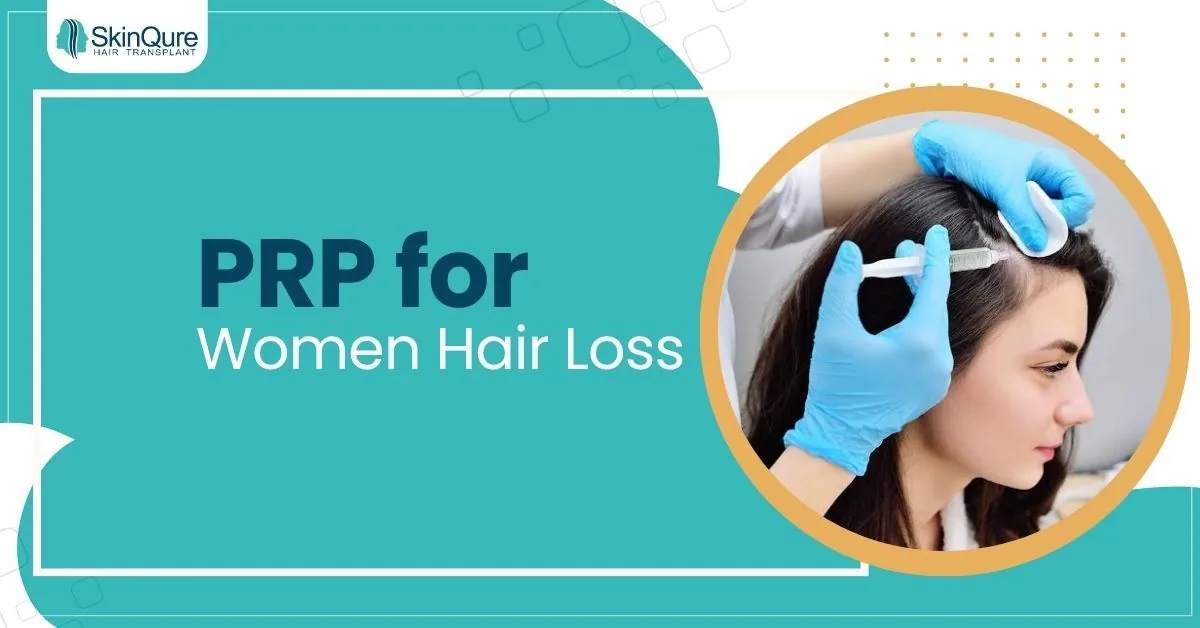
Platelet-rich plasma (PRP) treatment is a regenerative treatment that uses your own blood. For women's hair loss, a small amount of blood is drawn, the platelets are concentrated, and the platelet-rich plasma is injected into the thinning areas of the scalp.
Platelets contain growth factors that help cells and tissues regenerate. Injected into the scalp, they can stimulate inactive hair follicles, improve blood circulation and support healthy hair growth.
Many women choose PRP as a non-surgical treatment for hair loss that uses the body's own natural healing ability.
How Does PRP Therapy Promote Hair Growth?
Hair follicles need enough nutrients and a good blood supply to grow healthy hair. Weak follicles lead to slow, thin hair growth.
In PRP therapy for women's hair loss, growth factors are delivered directly to the thinning areas of the scalp. These growth factors help to:
- Stimulate inactive hair follicles
- Increase blood supply to the scalp
- Improve follicle health
- Strengthen existing hair strands
- Reduce hair shedding
- Support the natural hair growth cycle
The treatment works mainly by improving the environment around the hair follicles so they function better.
Does PRP Really Work for Women's Hair Loss?
Studies suggest that PRP can help women with early or moderate hair thinning. Many women notice less hair fall, better hair quality and improved hair density.
However, results vary from woman to woman and depend on age, general health, the cause of hair loss and how advanced it is.
Women whose hair follicles are still healthy usually respond better than those whose follicles are badly damaged. That is why it is best to start treatment before hair loss becomes advanced.
Most women who seek PRP treatment in Delhi are looking for a non-surgical way to manage hair loss.
How Is PRP for Women's Hair Loss Done?
PRP for women's hair loss is an outpatient procedure that usually takes less than an hour. It involves four steps:
1. Blood Collection
A small blood sample is taken from the arm.
2. Platelet Separation
The blood is spun in a centrifuge to separate the platelet-rich plasma from the rest of the blood.
3. Scalp Preparation
The scalp is cleaned, and a numbing cream or local anaesthetic is applied if needed.
4. Injections
The PRP is injected into the areas of the scalp where the hair is thinning. Most women can return to their daily activities almost immediately.
Benefits of PRP for Women's Hair Loss
PRP therapy has become popular because of several advantages.
Uses Your Own Blood
PRP is prepared from your own blood, so the risk of an allergic reaction is very low. Mild swelling, redness or tenderness at the injection sites usually settles within a few days.
Minimally Invasive
There is no surgery and no stitches. You can go back to work and your daily routine soon after a PRP session.
Stimulates Hair Follicles
The growth factors in PRP help activate the follicles in your scalp, so they can produce healthier, thicker hair over time.
Reduces Hair Fall
By activating the follicles and improving their health, PRP can help reduce hair fall.
Better Hair Volume and Density
After a course of PRP treatment, hair can look fuller and thicker. Completing the recommended sessions gives better results.
Works with Other Treatments
PRP can be combined with other doctor-guided treatments, such as medication or GFC therapy, as part of a complete plan for managing female hair loss. Read our comparison of PRP vs minoxidil.
PRP for Women at a Glance
| Question | Answer |
|---|---|
| Who is it suited to? | Women with early to moderate hair thinning whose follicles are still active |
| What does it use? | Platelet-rich plasma prepared from your own blood |
| How long does a session take? | Usually less than an hour |
| Is there downtime? | Most women return to daily activities almost immediately |
| Is it painful? | Mild discomfort; numbing can be used |
| When are results seen? | Less hair fall within a few months; density improves over several sessions |
| How many sessions? | Decided by the doctor at consultation, based on your hair loss |
Conclusion
Hair loss can be very distressing for women, but regenerative therapies offer new ways to treat it. PRP for women's hair loss is one of the most popular options for supporting hair growth, because it uses growth factors to stimulate the body's natural repair process. Results depend on many factors, but after a course of PRP many women notice less hair fall and better hair quality and density.
The best outcomes come from starting treatment on time, setting realistic goals and following a personalised treatment plan. If you are looking for a minimally invasive way to manage hair thinning, PRP therapy for women in Delhi is worth discussing with your doctor. At SkinQure, Dr. Jangid first identifies the cause of your hair loss and then recommends the right treatment. Request a consultation to find out whether PRP is right for you.
FAQs
1. Is PRP for women's hair loss safe?
Yes. PRP therapy for women in Delhi is generally safe because it uses the woman's own blood, and it is a minimally invasive procedure. Mild swelling or redness at the injection sites usually settles within a few days.
2. How many PRP sessions are needed?
The number of PRP sessions depends on how severe the hair loss is. Most women need a course of several sessions, and the doctor decides the exact number at the consultation.
3. When can I expect results after PRP for female hair loss?
Many patients notice less hair fall within a couple of months. Improvements in density and thickness usually appear after several PRP sessions.
4. Does PRP stop hair loss completely?
No. PRP helps reduce hair loss and encourages healthy hair growth, but it works differently for everyone. It supports hair growth rather than guaranteeing that there will be no hair loss in the future.
5. Is PRP therapy for women painful?
Most women feel only mild discomfort during PRP injections. At SkinQure, a numbing cream or local anaesthetic can be used to make the treatment more comfortable.

Dr. Jangid
Senior Dermatologist & Hair Transplant Surgeon, Ex-Senior Resident at AIIMS, with 18+ years of experience and the originator of the EnRiched-FUE™ approach.
Dr. Jangid, MD - Dermatology, Venereology & Leprosy, MBBS
Registered medical practitioner: Rajasthan Medical Council 025648 · Delhi Medical Council 40715 · Medical Council of India MCI-IMR/09/163