Sudden Bald Patches on the Scalp: Is It Alopecia Areata or Something Else?
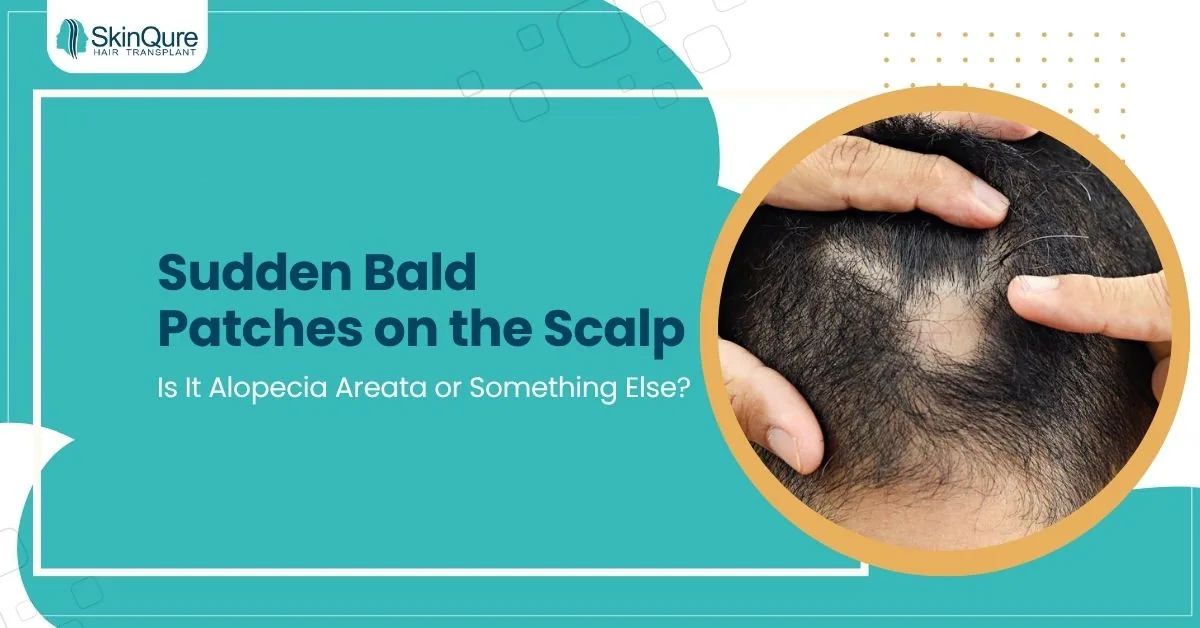
Discovering a bald patch on your scalp can be worrying, especially when it appears suddenly without any obvious reason. You may notice a small, round area without hair while combing, washing your hair, or looking in the mirror. Naturally, the first question that comes to mind is whether it is alopecia areata or another hair and scalp condition.
Quick answer: Sudden, smooth, round bald patches are often caused by alopecia areata, an autoimmune condition in which hair can usually grow back. But a scalp fungal infection (tinea capitis), hair pulling (trichotillomania), traction from tight hairstyles and scarring alopecia can look similar and need different treatment. Patches with redness, scaling, pus, pain or shiny skin, or that spread quickly, should be examined by a dermatologist promptly.
Although alopecia areata is a common cause of sudden, patchy hair loss, it is not the only possible explanation. Fungal infections, repeated hair pulling, traction from tight hairstyles, and certain inflammatory scalp conditions can also cause bald patches on the scalp. Some conditions may even damage hair follicles permanently if treatment is delayed.
The good news is that many causes of patchy hair loss can be managed effectively once they are correctly identified. The first step is understanding what might be causing the hair loss and why a proper dermatological examination is important before starting treatment.
What Are Bald Patches on the Scalp?
Bald patches on the scalp are localised areas where hair becomes noticeably thinner or disappears completely. They may develop over a few days or weeks and can occur in one or several areas.
The appearance of a bald patch can provide useful clues about its cause. For example, a smooth, round patch without visible inflammation may suggest alopecia areata. In contrast, a patch associated with scaling, redness, itching, or broken hairs may indicate a fungal infection or another scalp disorder.
However, these patterns are not sufficient to establish a diagnosis on their own. Different conditions can produce similar symptoms, which is why a dermatologist should examine the affected area.
Is It Alopecia Areata? Understanding the Condition
Alopecia areata is an autoimmune condition in which the immune system mistakenly attacks hair follicles, disrupting normal hair growth. It commonly causes sudden hair loss in small, round or oval patches on the scalp.
Unlike some other forms of hair loss, alopecia areata is generally non-scarring. This means the hair follicles are not permanently destroyed, and hair regrowth may be possible.
The condition can affect people of different ages and genders. It may also affect the beard, eyebrows, eyelashes, and other hair-bearing areas of the body.
Common signs of alopecia areata
You may notice the following symptoms:
- One or more round or oval bald patches.
- Smooth-looking skin within the affected area, usually without obvious scaling.
- Sudden hair loss without significant pain.
- Mild itching, tingling, or a burning sensation in some cases.
- Small, broken hairs near the edges of the patches.
- Nail changes, such as tiny pits or surface ridges, in some individuals.
In some cases, hair loss may spread beyond the initial patch or affect multiple areas. However, the progression varies from person to person.
Alopecia areata is not contagious. It cannot spread through physical contact, sharing a comb, or being around someone who has the condition.
What Else Can Cause Sudden Hair Loss Patches?
Not every bald patch indicates an autoimmune condition. Several other disorders can produce similar changes in hair growth.
1. Scalp fungal infection (Tinea capitis)
Tinea capitis is a fungal infection that affects the scalp and hair shafts. It is particularly important to consider in children, although adults can also develop it.
Unlike typical alopecia areata, fungal infections may cause:
- Itching and visible scaling.
- Broken hairs or black dots where hairs have broken off.
- Redness and tenderness.
- Swollen lymph nodes near the neck in some cases.
- Crusting, pus, or a painful, swollen area in more severe infections.
A severe inflammatory fungal infection can damage hair follicles and lead to permanent hair loss if not treated promptly.
Treatment usually requires prescription oral antifungal medication because shampoo alone cannot reliably eliminate an infection within the hair follicles.
2. Trichotillomania (hair-pulling disorder)
Trichotillomania involves repeatedly pulling, twisting, or breaking one's own hair. It may occur consciously or without the person fully realising it.
Hair loss typically appears irregular rather than forming a perfectly smooth, round patch. The affected area may contain hairs of different lengths, broken strands, and uneven edges.
Stress and emotional distress can sometimes contribute to this behaviour, but the condition is complex and should not be attributed to stress alone.
Management may involve dermatological assessment and, where appropriate, behavioural therapy or mental health support.
3. Traction alopecia
Traction alopecia develops when repeated tension places excessive stress on the hair follicles. It may occur due to tight ponytails, braids, buns, extensions, or other hairstyles that pull continuously on the hair.
Hair loss often appears along the hairline, temples, or other areas exposed to tension.
Early signs may include tenderness, small bumps, broken hairs, and thinning around the edges of the scalp. If the pulling continues for a prolonged period, the damage may become permanent.
Reducing tension early is important, and a dermatologist can determine whether additional treatment is needed.
4. Scarring alopecia
Scarring alopecia refers to a group of conditions in which inflammation damages and destroys hair follicles. Unlike non-scarring hair loss, the affected follicles may no longer produce hair once they have been permanently destroyed.
Possible warning signs include:
- Persistent redness or inflammation.
- Burning, pain, or tenderness.
- Scaling around individual hair follicles.
- Smooth, shiny areas where normal follicular openings are no longer visible.
- Bald patches that continue to expand.
Scarring alopecia requires timely medical evaluation because early treatment may help control inflammation and prevent further irreversible hair loss.
5. Telogen effluvium and other hair-growth disorders
Telogen effluvium usually causes increased hair shedding across the scalp rather than distinct, completely bald patches. It can occur a few months after significant physical or emotional stress, a major illness, surgery, childbirth, or certain nutritional changes.
Thyroid disorders, iron deficiency, some medications, and other medical conditions can also contribute to hair loss.
Although these conditions do not typically produce classic round bald patches, they may coexist with another hair disorder or create patterns that require closer examination.
Alopecia Areata vs Other Causes of Bald Patches
The following comparison explains some common differences. It is intended as a general guide, not a substitute for diagnosis.
| Condition | Typical appearance | Other possible clues |
|---|---|---|
| Alopecia areata | Smooth, round or oval patches | Usually little or no scaling |
| Tinea capitis | Patchy hair loss with broken hairs | Itching, scaling, redness |
| Trichotillomania | Irregular patches with uneven hair lengths | Broken hairs in different stages |
| Traction alopecia | Hairline or temple thinning | History of tight hairstyles |
| Scarring alopecia | Localised areas of hair loss | Inflammation, shiny skin, reduced follicular openings |
| Telogen effluvium | Diffuse hair shedding | Often follows illness, stress, or another trigger |
These features can overlap. A dermatologist may need to examine the scalp closely or perform additional tests to distinguish between them.
Warning Signs You Should Not Ignore
While a small bald patch may not always indicate a serious condition, certain symptoms warrant prompt medical assessment.
Seek a dermatological examination if you notice:
- Rapidly expanding bald patches: Hair loss that progresses over days or weeks.
- Multiple new patches: Bald areas appearing in different parts of the scalp.
- Eyebrow, eyelash, or beard involvement: Hair loss extending beyond the scalp.
- Pain, redness, or burning: Symptoms that may indicate inflammation.
- Scaling, crusting, or pus: Possible signs of infection or an inflammatory disorder.
- Shiny skin or missing follicular openings: Possible signs of scarring hair loss.
- Persistent or recurring hair loss: Patches that do not improve or repeatedly return.
A painful, swollen scalp lesion accompanied by pus or fever should be assessed urgently. Early diagnosis can be particularly important when an infection or scarring condition is suspected.
Why Is a Dermatological Examination Important Before Treatment?
One of the most common mistakes people make is starting hair growth products or home remedies before identifying the actual cause of their bald patches.
Although different scalp conditions can look similar, their treatments may be completely different. A medication that is appropriate for alopecia areata may not treat a fungal infection, while inappropriate use of topical steroids can mask or worsen certain infections.
A dermatologist evaluates the pattern of hair loss, examines the scalp, and considers the patient's medical history before recommending treatment.
What happens during the examination?
1. Medical history
The dermatologist may ask when the hair loss began, how quickly it has progressed, whether similar episodes have occurred previously, and whether there is a family history of autoimmune conditions or hair loss.
Information about recent illness, medications, nutritional changes, stress, and hair-care practices may also be relevant.
2. Scalp examination
The affected areas are examined for smooth skin, broken hairs, redness, scaling, inflammation, and signs of scarring.
The doctor may also inspect the eyebrows, eyelashes, beard, nails, and other areas when appropriate.
3. Dermoscopy or trichoscopy
A handheld magnification device allows the dermatologist to inspect the scalp and hair shafts in greater detail. Certain patterns of broken hairs, follicular openings, and inflammation can help distinguish between different causes of hair loss.
4. Additional tests, when needed
Depending on the findings, the dermatologist may recommend:
- A fungal examination or culture if an infection is suspected.
- Blood tests if the history or examination suggests a nutritional deficiency, thyroid disorder, or another relevant medical condition.
- A scalp biopsy if the diagnosis remains uncertain or scarring alopecia is suspected.
Not everyone requires blood tests or a biopsy. Investigations should be guided by the clinical findings rather than performed routinely without a clear reason.
Alopecia Areata Treatment: What Are the Options?
The right alopecia areata treatment depends on the extent of hair loss, the number and location of patches, the duration of the condition, the patient's age, and whether the hair loss is progressing.
Some people experience spontaneous hair regrowth, particularly when only a small area is affected. Others may require medical treatment to encourage regrowth or control the condition. Read more about whether patchy hair loss can be treated.
Treatment options may include the following.
1. Topical corticosteroids
Prescription corticosteroids applied to the affected areas may help reduce the immune-mediated inflammation associated with alopecia areata. The choice of medication, strength, and duration depends on the patient's age, the affected area, and the severity of the condition.
These medicines should be used under medical supervision because prolonged or inappropriate use can cause side effects.
2. Corticosteroid injections
For selected adults with a limited number of alopecia areata patches, a dermatologist may recommend corticosteroid injections directly into the affected areas.
Several sessions may be required, and hair regrowth, when it occurs, is gradual. This option is not suitable for every patient and may not be appropriate for young children or extensive disease.
3. Minoxidil
Minoxidil may be used in selected cases as an additional treatment to support hair regrowth or help maintain regrown hair. It does not correct the underlying autoimmune process, so it may not be sufficient as a standalone treatment for alopecia areata.
Its suitability depends on the individual's condition and treatment plan.
4. Treatment for extensive alopecia areata
When hair loss affects a large portion of the scalp or progresses significantly, a dermatologist may consider other options, including contact immunotherapy or systemic medicines such as certain Janus kinase (JAK) inhibitors.
These treatments require careful assessment because their eligibility, potential benefits, monitoring requirements, and risks differ. Some medicines are approved only for particular age groups or disease severities.
Important: Treatments for alopecia areata should not be used automatically for every bald patch. If the actual cause is a fungal infection, traction, or scarring alopecia, a different treatment approach will be necessary.
Can Hair Grow Back After Alopecia Areata?
Yes, hair regrowth is possible in alopecia areata because the condition usually does not destroy the hair follicles permanently.
However, the outcome is unpredictable. Some people experience complete regrowth without treatment, while others have recurring episodes or more extensive hair loss.
New hair may initially appear white, grey, or lighter than the surrounding hair before its usual colour returns. Regrowth may also take several months.
The likelihood and pattern of regrowth depend on factors such as the extent and duration of hair loss, the pattern of involvement, and the individual's response to treatment.
It is important to understand that no treatment guarantees permanent recovery or prevents every recurrence. Follow-up with a dermatologist helps assess progress and adjust the treatment plan when needed.
What Should You Do If You Notice a Bald Patch?
If you discover sudden hair loss, taking a few practical steps can help prevent unnecessary irritation while you arrange an examination.
- Avoid scratching, rubbing, or repeatedly pulling at the affected area.
- Stop hairstyles that place excessive tension on your hair.
- Use gentle hair-care products and avoid harsh chemical treatments on irritated skin.
- Do not share combs, hats, or towels if a fungal infection is suspected.
- Avoid applying steroid creams, antifungal medicines, or multiple hair growth products without a diagnosis.
- Take a photograph of the affected area to help monitor changes over time.
- Arrange a dermatological consultation, particularly if the patch is spreading or accompanied by inflammation.
Healthy eating and gentle hair care can support overall hair health, but they cannot replace condition-specific medical treatment. For other common reasons hair falls out, see why is my hair falling out.
When Should You Consult a Dermatologist at SkinQure?
If you are experiencing sudden hair loss patches, do not assume that the condition is alopecia areata based on appearance alone.
A dermatologist can assess the affected area, identify signs of infection or inflammation, and determine whether additional investigations are required. This is particularly important when bald patches appear suddenly, spread rapidly, or are accompanied by pain, scaling, or changes in the scalp's surface.
At SkinQure, Dr. Jangid can assess your hair and scalp concerns and recommend an appropriate management plan based on the clinical findings and your individual needs. See the hair loss treatments available at SkinQure.
Early assessment may help identify treatable conditions and reduce the risk of avoidable complications. Rather than relying on unverified remedies or starting medication independently, seek professional guidance to understand the cause of your hair loss.
Conclusion
Sudden bald patches on the scalp can develop due to alopecia areata, fungal infections, hair-pulling disorders, traction alopecia, or inflammatory conditions that damage hair follicles. Although some causes are temporary and may allow natural regrowth, others require timely medical treatment to prevent progression or permanent hair loss.
The appearance of a bald patch alone cannot confirm its cause. A dermatological examination, supported by dermoscopy and selected investigations when necessary, helps establish the diagnosis and guide appropriate treatment. If you notice new, expanding, or inflamed bald patches, consult a dermatologist rather than starting treatment on your own.
Request a consultation at SkinQure with Dr. Jangid to have your scalp examined and discuss suitable treatment options for your hair loss.
FAQs
1. What causes sudden bald patches on the scalp?
Sudden bald patches can be caused by alopecia areata, fungal infections, hair-pulling disorders, traction alopecia, or inflammatory scalp diseases. A dermatologist can identify the likely cause through examination and additional tests when necessary.
2. How can I tell if a bald patch is alopecia areata?
Alopecia areata often appears as a smooth, round or oval patch of hair loss without obvious scaling or redness. However, other conditions can produce similar patches, so a clinical examination is needed to confirm the diagnosis.
3. What is the best alopecia areata treatment?
There is no single best treatment for everyone. Depending on the extent of hair loss and the patient's circumstances, options may include topical corticosteroids, corticosteroid injections, minoxidil as an adjunct, or specialist treatments for extensive disease.
4. Can bald patches on the scalp grow back naturally?
Yes. Hair may regrow naturally in alopecia areata, and many non-scarring causes of patchy hair loss can improve with appropriate management. However, regrowth is not guaranteed, and scarring conditions may cause permanent hair loss.
5. Can a fungal infection cause bald patches?
Yes. Scalp fungal infections, such as tinea capitis, can cause patchy hair loss, broken hairs, itching, and scaling. They usually require prescription oral antifungal treatment, and severe inflammation needs prompt medical assessment.
6. When should I see a dermatologist for sudden hair loss?
Consult a dermatologist when a bald patch appears unexpectedly, expands, recurs, or is accompanied by redness, pain, scaling, crusting, or pus. Prompt assessment is especially important if scarring hair loss or a significant scalp infection is suspected.
7. Are blood tests necessary for every case of patchy hair loss?
No. Many cases can be diagnosed through a medical history and scalp examination. Blood tests, fungal testing, or a biopsy may be recommended when the findings suggest a specific underlying condition or when the diagnosis is uncertain.

Dr. Jangid
Senior Dermatologist & Hair Transplant Surgeon, Ex-Senior Resident at AIIMS, with 18+ years of experience and the originator of the EnRiched-FUE™ approach.
Dr. Jangid, MD - Dermatology, Venereology & Leprosy, MBBS
Registered medical practitioner: Rajasthan Medical Council 025648 · Delhi Medical Council 40715 · Medical Council of India MCI-IMR/09/163