Exosome Therapy for Hair Growth: How It Works, Benefits and Evidence
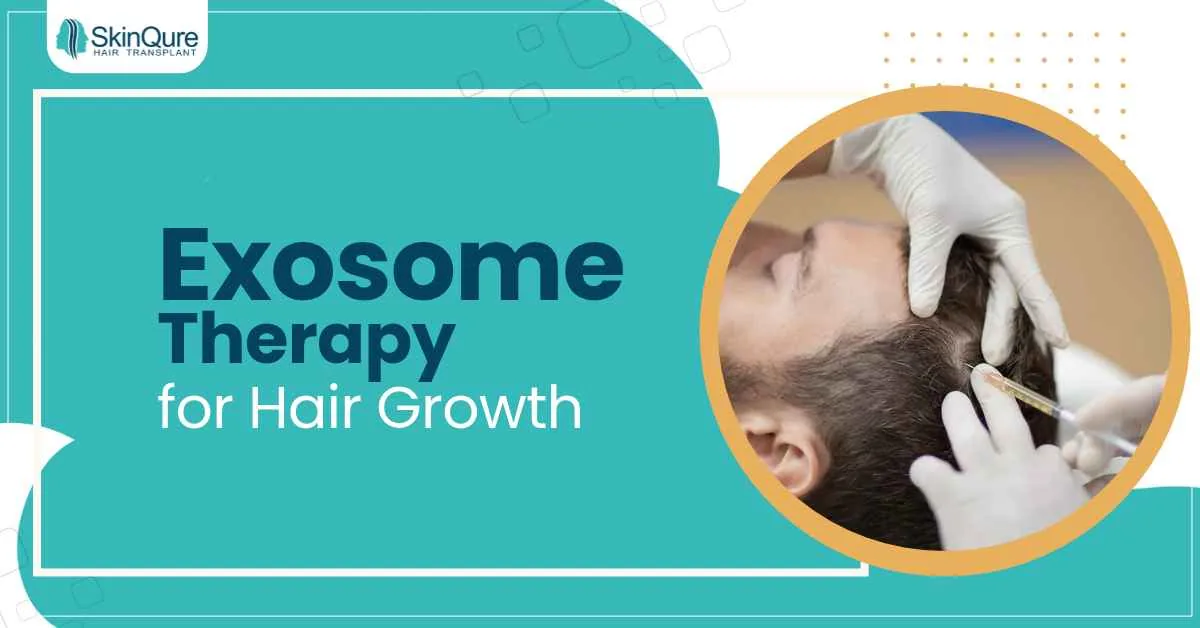
Hair loss is a concern that affects both men and women, and finding an effective treatment can sometimes feel overwhelming. Over the years, treatments such as Platelet-Rich Plasma (PRP) and Growth Factor Concentrate (GFC) have become popular options for people looking to improve hair density and manage hair thinning. However, advancements in regenerative dermatology have introduced another approach that is gaining attention: Exosome Therapy for Hair Growth.
Quick answer: Exosome therapy delivers tiny cell-signalling particles (exosomes) to the scalp to support hair follicles. Early studies report improvements in hair density in some patients, but the evidence is still limited, protocols are not standardised, and no exosome product is FDA-approved. It is an emerging option, not a proven replacement for treatments such as PRP or GFC, and should only be considered after a dermatologist has diagnosed the cause of your hair loss.
Exosomes are microscopic biological particles involved in communication between cells. They carry various biological molecules that may influence cellular activities, including processes involved in hair follicle function and tissue repair.
Unlike conventional hair treatments, exosome-based therapy focuses on delivering biological signalling molecules to the scalp. Early research suggests that these particles may support the hair growth environment and potentially improve hair density and thickness.
But what exactly are exosomes? How does exosome treatment for hair loss work? Is it more effective than PRP or GFC? And who may benefit from this treatment?
Let's understand the science, procedure, potential benefits, and current clinical evidence behind this emerging hair restoration approach.
What Are Exosomes?
Exosomes are tiny, membrane-bound extracellular vesicles released by cells. They are generally measured in nanometres and play an important role in communication between cells.
Think of them as small biological message carriers. They transport different molecules from one cell to another, helping cells exchange information and influence certain biological activities.
These molecules may include:
- Proteins and signalling molecules.
- Lipids that form part of their outer membrane.
- Messenger RNA (mRNA).
- MicroRNA (miRNA).
- Other cellular components.
In simple terms, exosomes help cells communicate with each other and coordinate certain activities within the body.
In regenerative medicine, researchers are studying how these extracellular vesicles may influence tissue repair, inflammation, and cellular activity.
For hair restoration, the main interest is whether exosomes can influence the activity of hair follicle cells and support the biological environment required for healthy hair growth.
How Does Exosome Therapy for Hair Growth Work?
Hair growth is a complex biological process involving different types of cells, signalling pathways, and growth cycles. Hair follicles continuously move through three main phases: anagen (growth), catagen (transition), and telogen (resting).
In conditions such as androgenetic alopecia (male pattern baldness and female pattern hair loss), hair follicles gradually become smaller through a process called follicular miniaturisation. As a result, hair strands become thinner, shorter, and less dense.
Exosome therapy for hair growth is being investigated for its potential to influence some of the cellular processes involved in this cycle.
Here is how it may work:
1. Cellular Communication
Exosomes carry biological signals that can be taken up by recipient cells. These signals may influence the activity of cells involved in maintaining hair follicle function.
2. Support for Hair Follicle Cells
Early laboratory research suggests that certain exosomes may influence dermal papilla cells and hair follicle stem cells. These cells play important roles in regulating hair growth and follicle development.
3. Influence on Hair Growth Signalling
Researchers are investigating how exosomes may influence pathways associated with hair follicle activity, including the Wnt/β-catenin signalling pathway.
These pathways are involved in regulating hair follicle development and growth.
4. Support for the Scalp Environment
Certain exosome formulations may also influence inflammatory responses and cellular repair mechanisms. This could potentially create a more supportive environment for hair growth.
It is important to understand that these mechanisms are still being investigated. Laboratory findings do not automatically translate into proven clinical benefits, and the effectiveness of treatment in humans requires further confirmation.
What Happens During Exosome Hair Treatment?
Exosome treatment for hair loss is a non-surgical procedure that generally involves delivering an exosome-containing formulation to the scalp.
The exact procedure depends on the formulation, its source, the delivery method, and the dermatologist's treatment plan.
At SkinQure, the procedure may involve the following steps, depending on the product and clinical suitability.
Step 1: Scalp Assessment
Before beginning treatment, the dermatologist evaluates the scalp and hair condition.
The assessment may include:
- Identifying the pattern and extent of hair loss.
- Evaluating hair density and thickness.
- Checking for scalp inflammation or other disorders.
- Understanding the patient's medical history.
- Determining whether exosome-based treatment is appropriate.
Identifying the underlying cause of hair loss is essential before selecting any regenerative treatment.
Step 2: Preparation of the Scalp
The scalp is cleaned before the procedure. Depending on the delivery method, a topical numbing cream may be applied to improve comfort.
Step 3: Application or Delivery of Exosomes
Exosome formulations may be delivered through different techniques, including:
- Microneedling: A dermapen or other microneedling device creates controlled microchannels through which an appropriate topical formulation may be delivered.
- Topical application: Certain formulations are applied to the scalp using a suitable delivery technique.
- Superficial injections: Some protocols involve small, superficial intradermal injections into selected scalp areas.
The appropriate technique depends on the specific product and its validated instructions. These delivery methods are not interchangeable, and their effectiveness may differ.
Step 4: Post-Treatment Care
After the procedure, the dermatologist provides instructions according to the treatment used.
Patients may be advised to avoid unnecessary scalp irritation and follow specific washing and hair-care instructions for a short period.
The procedure itself may take approximately 30–45 minutes, although the duration depends on the area being treated and the technique used.
Benefits of Exosome Therapy for Hair Growth
Exosome-based hair treatment is attracting interest because of its potential role in regenerative dermatology.
Some of the potential benefits being investigated include:
1. May Support Hair Density
Early clinical studies have reported improvements in hair density following certain exosome-based treatments. However, the results vary according to the formulation, delivery method, and individual condition.
2. May Improve Hair Thickness
Some research suggests that exosome-based formulations may influence hair follicle activity and support improvements in hair shaft thickness.
3. Non-Surgical Approach
Exosome treatment is generally performed without surgery or hair transplantation. Depending on the protocol, it may involve topical delivery, microneedling, or superficial injections.
4. Investigated for Regenerative Potential
Exosomes contain biological signalling molecules that may influence cellular communication, tissue repair, and inflammatory responses.
Their potential applications in hair restoration are an active area of research.
5. May Complement a Personalised Hair Treatment Plan
For selected patients, an exosome-based procedure may be considered as an additional treatment approach. It should not automatically replace established treatments for hair loss.
Important: These are potential benefits, not guaranteed outcomes. Exosome therapy for hair growth is still an emerging treatment, and larger, well-designed clinical trials are required to establish its effectiveness and long-term safety.
Exosome Therapy vs PRP vs GFC: What Is the Difference?
PRP, GFC, and exosome therapy are different approaches used in regenerative hair treatments. Although they share the objective of supporting hair follicle function, their biological composition and preparation methods are different.
| Feature | PRP | GFC | Exosome Therapy |
|---|---|---|---|
| Full form | Platelet-Rich Plasma | Growth Factor Concentrate | Extracellular vesicle-based treatment |
| Source | Patient's own blood | Patient's own blood | Depends on the product and biological source |
| Main components | Platelets and plasma proteins | Concentrated growth factors | Vesicles containing proteins, lipids and RNA |
| Main concept | Uses platelet-derived signalling molecules | Delivers concentrated growth factors | Investigates cell-to-cell signalling |
| Evidence | More established clinical experience | Growing clinical experience | Emerging clinical evidence |
| Treatment protocol | Multiple sessions may be required | Multiple sessions may be required | Varies by formulation and protocol |
Is Exosome Therapy Better Than PRP?
This is one of the most frequently asked questions about regenerative hair treatments.
PRP has been studied more extensively for androgenetic alopecia, whereas exosome therapy is a newer approach with promising but limited clinical evidence.
At present, there is insufficient high-quality comparative evidence to establish that exosome therapy is superior to PRP or GFC.
The choice between these treatments should depend on the patient's hair loss pattern, medical history, treatment goals, and the dermatologist's assessment.
Rather than assuming that one treatment is universally better, it is important to select an approach supported by appropriate clinical evidence. See also our comparison of PRP vs GFC.
What Does Clinical Research Say About Exosome Therapy for Hair Growth?
Interest in exosomes has increased significantly in dermatology because of their potential regenerative properties.
A 2025 systematic review published in Clinical, Cosmetic and Investigational Dermatology evaluated 11 clinical studies involving exosome-based interventions for hair loss.
The review reported improvements in at least one hair-related parameter across the included studies. Some studies reported increases in hair density ranging from approximately 9.5 to 35 hairs per square centimetre.
However, these findings need careful interpretation.
The studies used different exosome sources, formulations, delivery methods, and follow-up periods. Many also involved relatively small patient groups.
The researchers concluded that further standardised, high-quality clinical trials are necessary to confirm the effectiveness and establish consistent treatment protocols.
Therefore, although early findings are encouraging, exosome therapy should not yet be considered a proven replacement for established hair loss treatments.
Who May Be a Candidate for Exosome Hair Treatment?
Exosome-based treatments are being investigated mainly for conditions involving non-scarring hair loss, particularly androgenetic alopecia.
A dermatologist may evaluate whether this approach is suitable for individuals experiencing:
- Male pattern hair loss.
- Female pattern hair thinning.
- Reduced hair density.
- Early-stage follicular miniaturisation.
- Hair thinning that requires a personalised treatment approach.
However, not everyone experiencing hair loss is a suitable candidate.
Hair loss caused by nutritional deficiencies, thyroid disorders, scalp infections, autoimmune conditions, or scarring alopecia may require different treatment approaches. Sudden patchy hair loss, for example, needs a diagnosis first, as explained in sudden bald patches on the scalp.
A proper diagnosis is therefore essential before considering exosome therapy.
How Many Exosome Therapy Sessions Are Required?
There is currently no universally established treatment schedule for exosome-based hair restoration.
The number of sessions and intervals depend on the product formulation, concentration, delivery method, and clinical protocol.
Some protocols involve treatment sessions separated by several weeks or months. Others may follow a different schedule.
In the video at the end of this article, Dr. Jangid explains that certain protocols may be planned at intervals of approximately three to four months. However, this should not be interpreted as a standard schedule for every exosome product or patient.
The dermatologist should determine the appropriate treatment frequency after evaluating the patient's scalp and reviewing the formulation being used.
Are There Any Side Effects of Exosome Therapy?
Exosome treatment is generally described as a minimally invasive approach, but this does not mean it is completely free from risks.
Possible procedure-related effects may include:
- Temporary redness or swelling.
- Mild tenderness or discomfort.
- Small pinpoint bleeding after injections or microneedling.
- Temporary irritation or sensitivity.
- Infection or inflammatory reactions, particularly if sterile technique or product quality is inadequate.
An important consideration is the quality and source of the exosome formulation.
Products may differ in their biological origin, manufacturing process, purity, storage requirements, and quality control. These differences can influence both safety and potential effectiveness.
Patients should ask their dermatologist about the product's source, manufacturing standards, sterility, quality testing, regulatory status, and evidence supporting its intended use.
Is Exosome Therapy FDA Approved for Hair Loss?
This is an important question that patients should ask before considering treatment.
The US Food and Drug Administration (FDA) states that there are currently no FDA-approved exosome products. Exosome products intended for medical treatment generally fall under regulatory requirements and may require FDA approval.
In India, the Association of Cutaneous Surgeons of India (ACSI) published a consensus position statement in 2026 discussing emerging dermatological treatments, including exosomes for hair growth. The statement highlights concerns regarding limited clinical evidence, standardisation, regulation, and long-term safety, and regards exosome products as experimental rather than a routine treatment.
Patients should not assume that a product is approved or proven simply because it is offered by a clinic or marketed as a regenerative treatment.
Always discuss the product's regulatory status and clinical evidence with a qualified dermatologist before proceeding.
Exosome Therapy for Hair Growth at SkinQure
At SkinQure, hair restoration begins with understanding the reason behind hair loss rather than recommending the same treatment to everyone.
Dr. Jangid, a dermatologist, evaluates the patient's scalp condition, hair density, pattern of thinning, and medical history before discussing suitable treatment options.
Exosome-based treatment may be discussed as an emerging regenerative approach for selected patients, depending on clinical suitability and the product's quality and regulatory status.
SkinQure has clinics in:
- Punjabi Bagh, New Delhi.
- Saket, New Delhi.
If you are experiencing hair thinning or reduced hair density, consult a dermatologist to understand the available treatment options and whether an exosome-based approach is appropriate for your condition. For questions about cost, see our exosome therapy cost and benefits guide.
Conclusion
Exosome therapy for hair growth represents an emerging area of regenerative dermatology. These microscopic extracellular vesicles play an important role in cellular communication and are being studied for their potential to influence hair follicle activity, hair density, and hair thickness.
Early clinical findings are encouraging, but the available evidence remains limited, and more research is required to establish standardised protocols, long-term safety, and effectiveness.
Unlike PRP and GFC, which have more established clinical experience, exosome-based hair treatments are still developing. Therefore, they should be considered carefully and only after evaluating the patient's hair loss condition, treatment goals, and the quality of the product being used.
Thinking about advanced hair restoration treatments? Request a consultation with Dr. Jangid at SkinQure to understand the cause of your hair loss and explore suitable treatment options based on your individual scalp condition.
FAQs
1. What is exosome therapy for hair growth?
Exosome therapy is an emerging regenerative approach that uses extracellular vesicles containing biological signalling molecules. Researchers are studying their potential to influence hair follicle activity and support hair growth.
2. How does exosome treatment work for hair loss?
Exosomes carry proteins, lipids, and RNA that help cells communicate. Certain exosome formulations are being investigated for their potential to influence hair follicle cells, cellular repair, and pathways associated with hair growth.
3. Is exosome therapy better than PRP for hair growth?
There is currently insufficient evidence to establish that exosome therapy is better than PRP. PRP has more established clinical evidence, while exosome-based hair treatments require further research and standardisation.
4. How many sessions of exosome therapy are required?
There is no universally established treatment schedule. The number and frequency of sessions depend on the formulation, delivery method, and individual treatment plan.
5. How long does an exosome hair treatment session take?
A session may take approximately 30–45 minutes, depending on the treatment area and delivery technique.
6. Are there any side effects of exosome hair treatment?
Possible side effects include temporary redness, swelling, tenderness, irritation, and procedure-related discomfort. Product quality and sterile administration are important safety considerations.
7. Who is suitable for exosome therapy for hair growth?
People with selected forms of non-scarring hair loss, particularly androgenetic alopecia, may be evaluated for this treatment. A dermatologist must first identify the underlying cause of hair loss and determine suitability.
8. Is exosome therapy a permanent solution for hair loss?
No. There is currently insufficient long-term evidence to establish that exosome therapy provides permanent hair restoration. Results may vary, and ongoing management of the underlying hair loss condition may still be necessary.

Dr. Jangid
Senior Dermatologist & Hair Transplant Surgeon, Ex-Senior Resident at AIIMS, with 18+ years of experience and the originator of the EnRiched-FUE™ approach.
Dr. Jangid, MD - Dermatology, Venereology & Leprosy, MBBS
Registered medical practitioner: Rajasthan Medical Council 025648 · Delhi Medical Council 40715 · Medical Council of India MCI-IMR/09/163