Thyroid Hair Loss: Signs, Diagnosis and How to Treat It
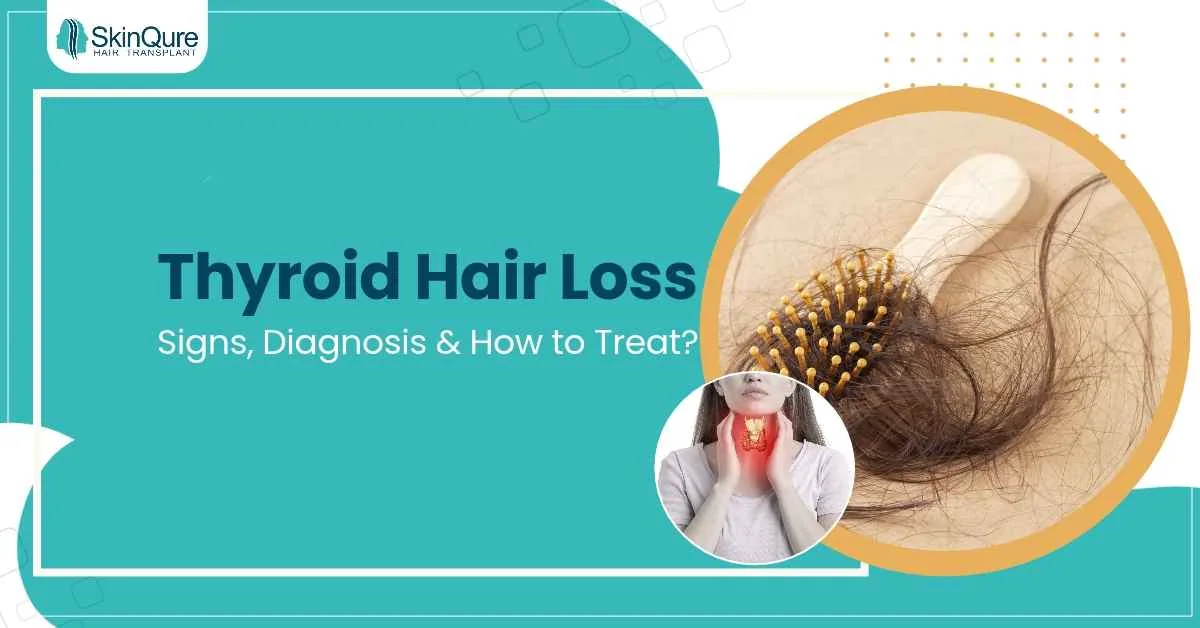
Hair loss can be upsetting, especially when you cannot work out the cause. One cause many people overlook is a thyroid disorder. Thyroid hair loss happens because the thyroid gland controls hormones that regulate the body's metabolism, and an imbalance in these hormones can disturb hair growth.
Quick answer: Both an underactive thyroid (hypothyroidism) and an overactive thyroid (hyperthyroidism) can cause hair loss. It usually appears as diffuse thinning all over the scalp rather than bald patches, often with dry, brittle hair and, in hypothyroidism, thinning of the eyebrows. A blood test (TSH, T3 and T4) confirms the diagnosis. Once thyroid levels are brought under control with medical treatment, hair usually starts to recover over a few months.
Knowing how to recognise hair loss caused by a thyroid problem helps you get the right treatment sooner. In this blog, we explain how the thyroid affects hair growth, how thyroid hair loss is diagnosed, and how it is treated.
What Is Thyroid Hair Loss?
The thyroid gland in the neck produces hormones that regulate the body's metabolism and energy levels. When the gland becomes overactive or underactive, it causes a hormonal imbalance.
Hair grows in a cycle of growing, resting and shedding phases. A thyroid imbalance disrupts this cycle, so more hairs than usual move into the shedding phase and fewer new hairs grow. The result is excessive hair fall and thinning. Losing around 50 to 100 hairs a day is normal; read more about common reasons hair falls out.
Signs of Thyroid Hair Loss
Early recognition helps you get the right treatment. Signs to look out for include:
1. Diffuse Hair Loss
Thyroid-related hair loss usually does not cause bald patches. Instead, hair thins evenly across the whole scalp. Sudden round patches point to a different cause, such as alopecia areata.
2. Dull, Dry Hair
Hair can become thin, dry, coarse and frizzy because of the hormonal imbalance.
3. Thinning Eyebrows
Loss of eyebrow hair, especially from the outer part of the eyebrows, is seen particularly in people with hypothyroidism.
4. Slow Hair Growth
In hypothyroidism, low thyroid hormone levels slow the body's metabolism, which can make hair grow more slowly and become dry and brittle.
5. Other Thyroid Symptoms
Thyroid hair loss usually comes with other symptoms, such as tiredness, weight gain or weight loss, dry skin, and sensitivity to heat or cold.
How Thyroid Problems Cause Hair Loss
Hypothyroidism (Underactive Thyroid)
An underactive thyroid slows the body's metabolism. Hair follicles become less active, fewer new hairs grow, and the existing hair can become dry, coarse and brittle.
Hyperthyroidism (Overactive Thyroid)
An overactive thyroid produces too much hormone and speeds up metabolism. This can push hair follicles into the shedding phase too early, leading to increased hair fall and fine, thin hair.
Hormonal Imbalance
Changes in thyroid hormone levels disturb the hair growth cycle and the production of the proteins hair needs to grow. Sudden shedding after a thyroid flare is similar to telogen effluvium.
Nutrient Deficiency
Thyroid problems are often seen together with deficiencies of nutrients such as iron, zinc and some vitamins. These deficiencies make it harder for hair follicles to stay healthy, so hair loss becomes more noticeable. Iron deficiency is a common example.
Hypothyroidism vs Hyperthyroidism: Effects on Hair
| Hypothyroidism | Hyperthyroidism | |
|---|---|---|
| Thyroid activity | Underactive, too little hormone | Overactive, too much hormone |
| Hair changes | Diffuse thinning; dry, coarse, brittle hair; slow growth | Diffuse thinning; fine, thin hair; increased shedding |
| Eyebrows | Thinning, especially the outer part | Less commonly affected |
| Other common symptoms | Tiredness, weight gain, dry skin, feeling cold | Weight loss, fast heartbeat, sweating, feeling hot |
How Is Thyroid Hair Loss Diagnosed?
1. Blood Tests
Doctors usually recommend blood tests for TSH, T3 and T4 to check how well the thyroid is working. Tests for iron, vitamin levels and other causes of hair loss may also be advised. If you take biotin supplements, tell your doctor before the test, because biotin can interfere with the results of some thyroid blood tests.
2. Medical History
The doctor will ask about symptoms such as tiredness, irregular periods and noticeable weight changes, as well as any thyroid medicines you already take.
3. Scalp Examination
The scalp is examined to check for dandruff, alopecia or other scalp conditions that may be causing or adding to the hair loss.
Early diagnosis helps control hair loss and also prevents other complications of untreated thyroid disease.
Treatment for Thyroid Hair Loss
1. Thyroid Medication
Treating the thyroid problem itself is the most important step. Medicines prescribed by your physician or endocrinologist bring hormone levels back into balance. Once levels are stable, hair shedding usually slows and regrowth becomes possible. Hair may continue to shed for a few months after treatment starts, which is expected.
2. Nutritional Support
A healthy, balanced diet supports hair regrowth. Nutrients such as iron, protein and zinc help strengthen hair and improve its texture and density. Supplements should be taken only if your doctor finds a deficiency. Read more about biotin for hair growth.
3. Gentle Hair Care
Good hair care prevents further damage to fragile hair. Use a mild shampoo and limit heat styling and chemical treatments.
4. PRP Treatment
PRP therapy uses growth factors from your own blood to stimulate inactive hair follicles and can help thicken hair. It works best as a supporting treatment once thyroid levels are under control.
5. Stress Management
Stress can affect your hormones and make hair loss worse. Yoga, enough sleep and meditation help keep stress under control.
Thyroid Hair Loss Treatment in India
Effective and affordable options for treating thyroid hair loss in India are widely available. The best results come when the thyroid condition is managed by your physician or endocrinologist, while a dermatologist treats the hair and scalp.
A correct diagnosis and a personalised treatment plan are the keys to good results. At SkinQure, Dr. Jangid assesses your hair loss, checks for other causes such as female pattern hair loss that can occur alongside a thyroid problem, and plans hair loss treatment in coordination with your thyroid care.
Tips to Prevent Thyroid Hair Loss
- Eat a nutritious, balanced diet
- Take your thyroid medicine every day, exactly as prescribed
- Get your thyroid levels checked as often as your doctor advises
- Avoid harsh chemical treatments on your hair
- Keep stress under control
With the right treatment and good hair care habits, most people can restore healthy hair growth.
Conclusion
Thyroid hair loss can be distressing, but it can usually be managed with a correct diagnosis and the right treatment. Consulting a dermatologist early helps avoid further hair loss and identifies any other cause that needs treatment. Request a consultation at SkinQure to have your hair loss assessed.
FAQs
1. What is thyroid hair loss?
Thyroid hair loss is hair thinning caused by an underactive or overactive thyroid. The hormonal imbalance disturbs the normal growth cycle of hair follicles, leading to diffuse thinning across the scalp.
2. Does hypothyroidism cause hair loss?
Yes. Hypothyroidism can cause hair thinning, dryness, brittleness and slow growth, as well as thinning of the eyebrows, if it is not well controlled.
3. What is the treatment for hypothyroid hair fall in India?
Treatment starts with thyroid medication prescribed by your doctor to correct hormone levels, along with nutritional support for any deficiencies. Treatments such as PRP therapy can support regrowth once thyroid levels are controlled.
4. Is thyroid hair fall reversible?
In most cases, yes. Hair usually starts to grow back gradually once thyroid hormone levels are restored. If thinning continues despite normal thyroid levels, another cause, such as pattern hair loss, may also be present and should be checked.
5. How long does it take to treat thyroid hair loss?
Hair regrowth usually takes around three to six months after thyroid levels are controlled, and it can take longer to see full improvement in density.
6. Does PRP work for hair loss caused by thyroid problems?
PRP therapy may help hair grow back, but only after the thyroid problem is being treated. It supports regrowth; it does not treat the thyroid condition itself.
7. When should I see a doctor for thyroid hair loss?
See a doctor if you are losing more hair than usual for several weeks, if your hair or eyebrows are thinning, or if hair loss comes with other thyroid symptoms such as tiredness, weight changes or sensitivity to heat or cold.

Dr. Jangid
Senior Dermatologist & Hair Transplant Surgeon, Ex-Senior Resident at AIIMS, with 18+ years of experience and the originator of the EnRiched-FUE™ approach.
Dr. Jangid, MD - Dermatology, Venereology & Leprosy, MBBS
Registered medical practitioner: Rajasthan Medical Council 025648 · Delhi Medical Council 40715 · Medical Council of India MCI-IMR/09/163