Botched Hair Transplant: Can It Be Fixed?
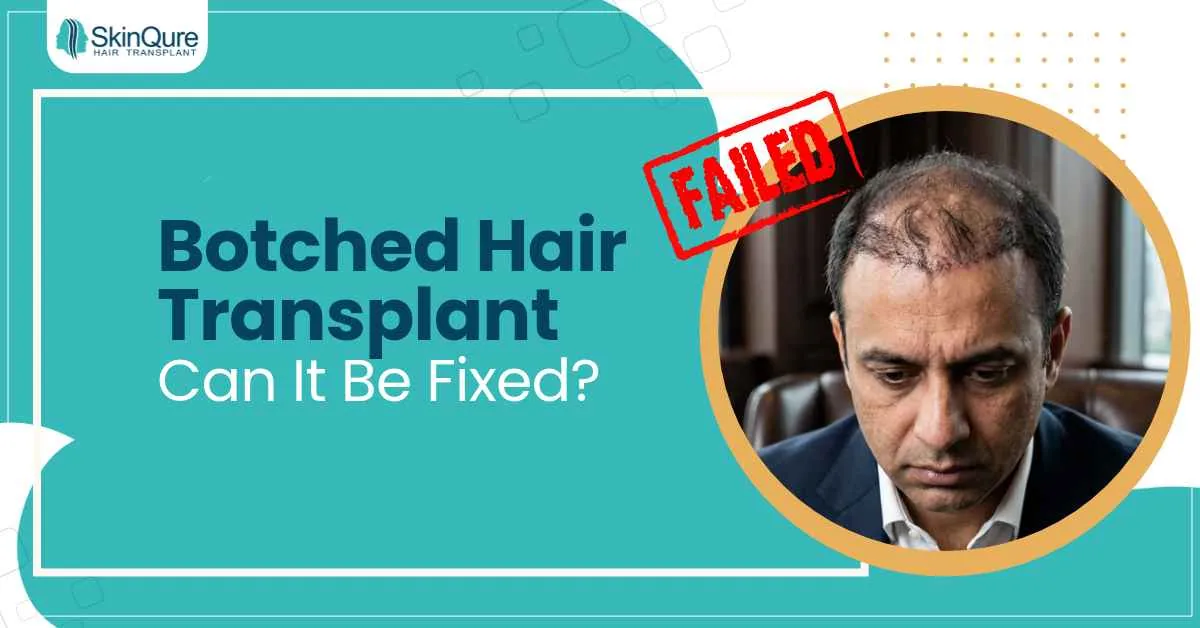
Quick answer: Yes, a botched hair transplant can often be improved, but it cannot always be fully reversed. Hair transplant repair can soften an unnatural hairline, add density and hide scars. What it cannot do is bring back donor hair that was wasted the first time, so the result of a repair depends mainly on how much healthy donor hair is left.
A failed hair transplant is more common than most people expect. In the International Society of Hair Restoration Surgery (ISHRS) 2025 Practice Census, members said about 10% of their repair cases in 2024 came from black-market clinics, up from 6% in 2021. World Hair Transplant Repair Day, marked on 11 November each year, exists because of this problem.
If you are researching a hair transplant in Delhi, or living with a hair transplant gone wrong, this guide explains what can be fixed, what cannot, and how to avoid needing a repair at all.
Has Your Hair Transplant Failed, or Is It Still Healing?
Many people panic too early. A transplant takes about 12 months to show its final result, and some alarming-looking stages are normal. See the hair growth timeline after a hair transplant.
Usually Normal
- Redness, scabs and mild swelling in the first two weeks
- Transplanted hairs falling out between weeks 2 and 8, often called shock loss; the roots stay and regrow
- Thin, patchy growth between months 3 and 6
Signs of a Failed Hair Transplant
- An unnatural hairline: too low, too straight, or hairs growing in clumps or at the wrong angle
- Poor growth: little visible improvement 12 months after surgery
- A damaged donor area: see-through or patchy hair at the back and sides of the head
- Visible scarring: a wide line scar, or many white dots where grafts were taken
- Bumpy or pitted skin around the transplanted hairs
See a doctor straight away if you have increasing pain, pus, fever, or skin turning dark in the weeks after surgery. These can be signs of infection or poor blood supply, and they need treatment, not waiting. Read more about the warning signs of infection after a hair transplant.
Why Do Hair Transplants Go Wrong?
Most botched transplants trace back to who did the surgery, not to the technique. In the ISHRS 2025 Practice Census, 59% of surveyed members said black-market clinics were operating in their cities in 2024, up from 51% in 2021. The ISHRS says these clinics attract patients with steep discounts and fake result photos, and that surgery is often done by people who are not trained physicians.
The common causes are:
- Surgery by technicians, not a doctor. Hairline design, incisions and graft removal need medical training.
- Overharvesting. Taking too many grafts thins the donor area for good.
- Poor planning. A hairline set too low or too dense leaves no donor hair for future hair loss.
- Rough graft handling. Grafts that dry out or are damaged do not grow.
- Poor hygiene and aftercare. These raise the risk of infection and scarring.
For more detail, read why some hair transplants fail.
What Do India's Rules Say About Who Can Perform a Hair Transplant?
India's National Medical Commission (NMC) issued guidelines on aesthetic surgery and hair transplants in September 2022. As reported by Medical Dialogues, they say:
- Only trained, registered medical practitioners should perform these procedures, preferably dermatologists (MD/DNB) or plastic surgeons (MCh/DNB).
- Planning, surgery and aftercare must be done by the doctor. Technicians may assist only under the doctor's direct supervision.
- Watching a workshop or YouTube “is not adequate training.”
- The clinic must be a registered day care centre or hospital, with resuscitation equipment and a link to a hospital with an ICU.
The central government is also preparing stricter rules that would bar salons and beauty centres from offering hair transplants, The420.in reported in January 2026. Those rules were not final at the time of that report.
Hair Transplant Repair: What Can Be Fixed and What Can't
Repair is planned problem by problem. Each fix has a limit, and the surgeon should explain it before any work starts.
| The problem | How it can be repaired | The limit |
|---|---|---|
| Unnatural or “pluggy” hairline | Badly placed grafts are removed and replanted, and fine single-hair grafts are added in front to soften the line | Needs spare donor hair; small scars may remain |
| Hairline set too low | Grafts are removed from the front and reused elsewhere | Usually needs more than one session |
| Thin result or poor growth | A second transplant, once the cause of the poor growth is found | Only possible if enough donor hair is left |
| Overharvested donor area | Beard or body hair grafts, or scalp micropigmentation (tiny pigment dots) to hide the thinning | Lost donor hair does not grow back |
| Wide strip scar | Grafts placed into the scar, scar revision surgery, or scalp micropigmentation | Hair grows less reliably in scar tissue |
| Hairs growing at the wrong angle | Removal and re-placement at a natural angle | Limited by donor supply and skin scarring |
Repair is usually slower than a first transplant. In one ISHRS repair case study, a patient whose donor area had been overharvested needed several sessions spread over more than a year. His hairline was significantly improved, but the damaged donor area limited what could be done.
When Should You Seek a Repair, and What Decides the Result?
Wait about 12 months before judging the result. Hair grows slowly, and a transplant that looks thin at month 5 can look complete at month 12. The exception is a medical problem such as infection, which needs a doctor immediately.
The donor area decides what is possible. Donor hair at the back and sides of the head is limited, and every graft can be used only once. A repair surgeon will first check:
- How much healthy donor hair remains
- How much scarring the first surgery left
- Whether your hair loss is still progressing
- What you most want to change
Expect stages, not one sitting. Repairs are often done in two or more sessions, months apart, so the skin can heal between them.
Bring your records to the consultation if you have them: the number of grafts taken, the technique used, and photos from before and after surgery.
How to Avoid a Botched Hair Transplant
Prevention is easier than repair. The ISHRS advises patients to ask who performs each part of the surgery, not just whether a doctor will be present. Before you book, ask these questions, adapted from its list of red flags and questions:
- Who is the doctor responsible for my care, and will I meet them before the procedure?
- Who will design my hairline, give the anaesthesia, make the incisions and remove the grafts?
- Which parts will technicians handle, and who supervises them?
- What is the doctor's qualification and registration number? You can verify it with the state medical council.
- What is the plan if my hair loss continues, and who treats me if there is a complication?
Red Flags to Walk Away From
- No named surgeon, only a brand name
- A consultation that feels like a sales pitch
- Promises of huge or “unlimited” grafts
- Prices far below everyone else's, or pressure to book today
- Results shown only through social media posts and reviews
See also: how to choose a hair transplant clinic and planning a hair transplant in 2027.
Hair Transplant Repair in Delhi: The Approach at SkinQure
SkinQure is a dermatologist-led clinic for hair transplant in Delhi, founded by Dr. Jangid, MD (Dermatology), a former Senior Resident at AIIMS, New Delhi, with more than 18 years of experience. It has clinics in Saket and Punjabi Bagh.
For anyone worried about an earlier transplant, a consultation covers the same points this guide describes:
- An examination of the transplanted area and the donor area
- An honest view of what can and cannot be improved
- A staged plan, if repair is possible, with realistic timelines
- Medical treatment, such as PRP or GFC, to protect the hair you still have
Sometimes the right advice is to wait, or not to operate at all. A good repair consultation should be willing to say so. Read more about hair transplant correction after failed surgeries and revision hair transplant in Delhi.
FAQs
1. Can a botched hair transplant be fixed?
Often, yes. Hairlines can be softened, density added and scars hidden. A full reversal is not always possible, because it depends on how much healthy donor hair remains.
2. How long should I wait before a hair transplant repair?
About 12 months after the first surgery, so the final result is clear and the skin has healed. Infection or other medical problems should be treated straight away.
3. How do I know if my hair transplant has failed?
Signs include little growth after 12 months, a hairline that looks unnatural, patchy thinning in the donor area, or visible scarring. Shedding in the first two months is usually normal.
4. Can an overharvested donor area be repaired?
The lost hair does not grow back. The thinning can be made less visible with beard or body hair grafts, or with scalp micropigmentation.
5. Can transplanted grafts be removed?
Yes. Badly placed grafts can be removed one by one and, in many cases, replanted in a better position.
6. Is hair transplant repair more difficult than a first transplant?
Yes. The surgeon works with scarred skin and a smaller donor supply, so repairs are usually done in stages.
7. Who is allowed to perform a hair transplant in India?
NMC guidelines from 2022 say only trained, registered medical practitioners should perform it, preferably dermatologists or plastic surgeons, in a registered clinic or hospital.
8. How can I check a hair transplant surgeon's credentials?
Ask for the doctor's qualification and registration number, and verify it with the state medical council or the National Medical Register.
Sources
- Sixth Annual World Hair Transplant Repair Day, International Society of Hair Restoration Surgery (ISHRS), 29 October 2026, citing the ISHRS 2025 Practice Census
- Hair Transplant Black Market Red Flags, ISHRS Fight the FIGHT campaign
- Hair Transplant Repair Case Study: Overharvested Donor Area, ISHRS Fight the FIGHT campaign
- Only MD/DNB Dermatology, MCh/DNB Plastic Surgery should perform aesthetic surgeries including hair transplant: NMC, Medical Dialogues, 28 September 2022
- Tighter Hair Transplant Rules in India: Doctors Only, No Salons, The420.in, 16 January 2026
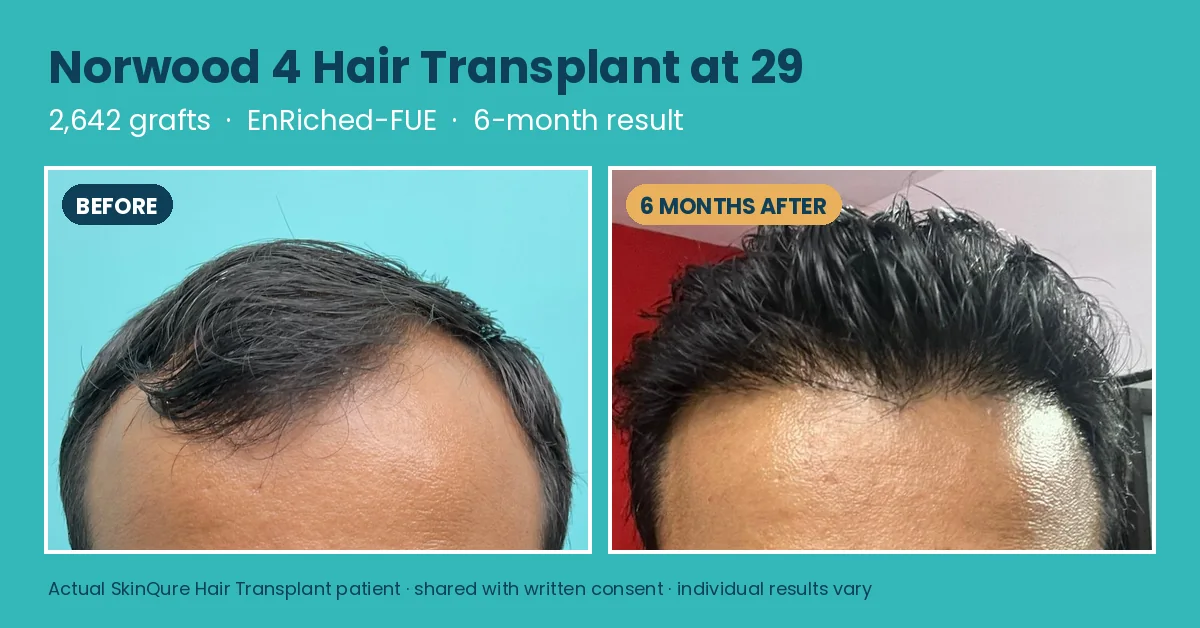
Disclaimer: These images feature actual patients of SkinQure and are shared with their informed consent for educational and awareness purposes. Individual results may vary depending on hair loss patterns, donor area, and overall health. Similar outcomes cannot be guaranteed.
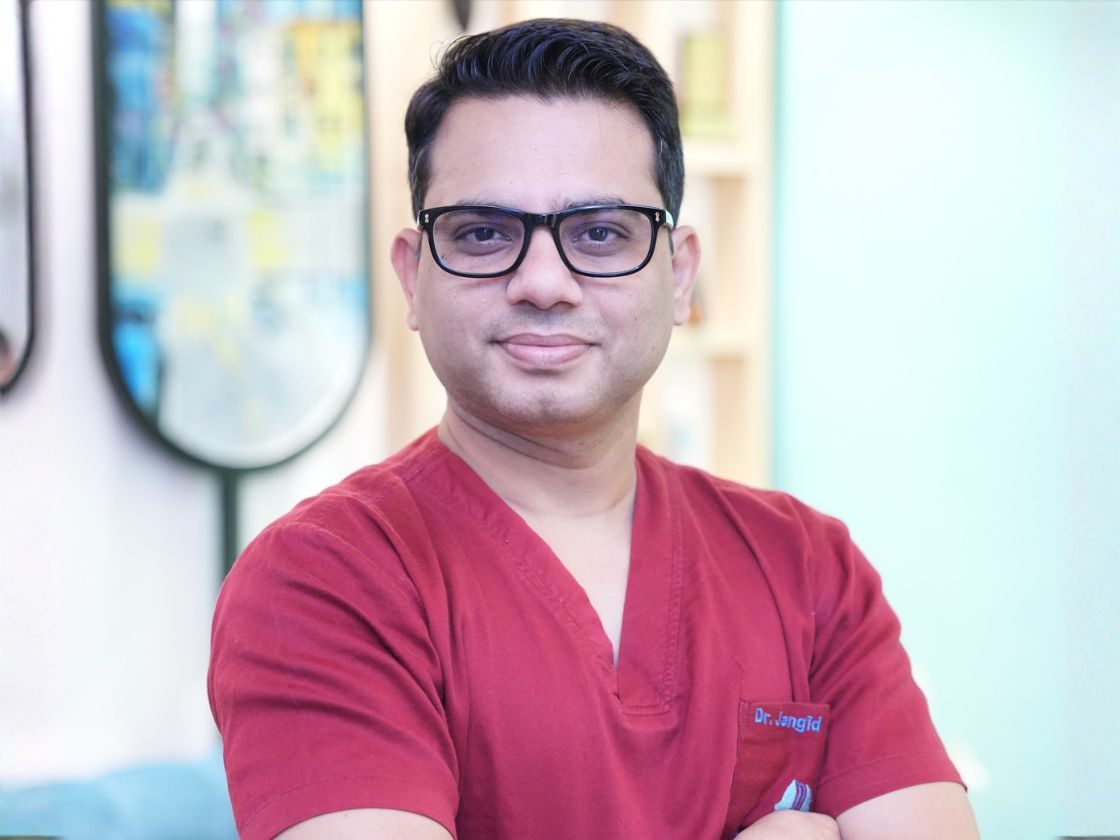
Dr. Jangid
Senior Dermatologist & Hair Transplant Surgeon, Ex-Senior Resident at AIIMS, with 18+ years of experience and the originator of the EnRiched-FUE™ approach.
Dr. Jangid, MD - Dermatology, Venereology & Leprosy, MBBS
Registered medical practitioner: Rajasthan Medical Council 025648 · Delhi Medical Council 40715 · Medical Council of India MCI-IMR/09/163